The chiminea was the last thing onto the van. It had been sitting on the middle terrace of a garden in Llangyfelach, SA5, west of the south Wales coast road. Next to it, a rusted barbecue, a stack of old plant pots and enough bramble to fill the top level twice over. That booking had already slipped twice, once from the tenth of April and once from the twenty-ninth. When we finally pinned down the Thursday, the customer wrote back: "Third time lucky hopefully." Fair enough.
West Glamorgan, as it was. We arrived on the first of May, came in through the side access, and worked the three levels from the bottom up. Rubbish from down the side of the house went first. Then the garden furniture, the old pots and the barbecue off the middle terrace, with the shrubs cut back behind them. Then the layered bit on that level, old pots buried in bramble. Last the top level, where the brambles had been left to do as they liked and nobody had got through for a good while.
Two things had been settled on the phone weeks earlier, and both of them mattered on the day. Parking was on the front of the house, so the van sat where the team could see it. And power was there without a fight, because we had asked: "Yes there is an outside electric point at the property or they can plug in from the conservatory if they have a long extension." That is the sort of answer that takes ten seconds to give and saves an hour on site. The customer was there throughout but in and out between appointments, which is fine by us so long as we have agreed what is going before the first barrow load moves.
Gardens like that one are half our Swansea diary in spring. The other half is houses.
What comes out, and where it ends up
The house clearance Swansea households ring us about most often is the one nobody planned for. A parent's house, a tenancy ending, a sale that has suddenly got a date on it. What comes out is usually the same shape: the furniture, the beds, the white goods, the shed, and then the loft, which is the part people forget.
Fridges and freezers do not travel in with the general load. The gas in the coolant circuit means they are handled as hazardous and go off down their own route, so they come out of the house last and sit apart on the van. Mattresses are kept separate too — the transfer station takes them as their own stream and will not have them mixed in.
Sofas and armchairs are their own category now. The old foams and treated fabrics count as POP items — persistent organic pollutants — so upholstery is kept apart from everything else and sent down a permitted route rather than tipped with general bulky waste. That is not us being awkward; the law changed under our feet in 2023, and a three-piece suite that would once have gone straight in the back now gets loaded on its own.
Everything that still has a use, we would rather not tip at all. Dining chairs with the fire labels still stitched on, unchipped crockery, clean bed linen, tools. Those go to a reuse project or a charity shop that will genuinely take them, and plenty round here will. What nobody will take goes to a permitted transfer station and comes back to us as paperwork. Ask for the waste transfer note and we will send it over; we have been doing this work since 2007, we are a registered waste carrier, licence CBDU419679, and the firm is insured for the work.
Some of what we carry out of Swansea houses has not moved in fifty years. A teak sideboard with the drawers full of tablecloths. A nest of tables. A china cabinet with the good dinner service still standing in it, unused since the last big Christmas. A tallboy, a dressing table with a triple mirror, a G Plan wall unit that had to come apart on the landing. Boxes of records too — Bridge over Troubled Water, Wand'rin' Star, Love Grows — which usually get set aside for the family to look through before anything goes near the van.
Parking, access and the awkward bits
Most house clearance Swansea work splits into two kinds of street. The valley streets — Manselton, Landore, parts of Morriston in SA6 — are terraced and on a slope. Cars park both sides, and there is nowhere obvious for a Luton. Half of them have a rear lane. It is either the answer to everything or blocked by a wheelie bin and a shed extension, and you cannot tell which from a map. The newer estates out at Penllergaer, Gorseinon and Gowerton in SA4 have drives and turning space. They also have a long walk from the front door to where a van can stand. Neither is a disaster. It just changes how many trips the day takes, and we would sooner know beforehand than find out at half nine in the morning.
The city centre and Townhill end of SA1 brings the other problem. Flats over shops, a shared street door, and a stair that a two-seater sofa was carried up in pieces years ago and now comes down the same way. Uplands and Sketty in SA2 have the big Victorian villas cut into flats. The hall is shared, and a landing cannot be left blocked while you work. Out on the Mumbles and Gower side in SA3 the lanes are narrow, with passing places. In summer the parking near the front is gone by mid-morning, so we start early or we start somewhere else in the house. Up the Swansea valley in SA8 and SA9, around Pontardawe and Ystalyfera, it is terraces again, often with a steep step up from the pavement.
Where the street genuinely will not take a van for a day, the council's parking team can suspend a bay or grant a dispensation, and it is worth asking well before the date rather than the night before. If you are not sure whether a Luton will fit, send a photograph of the street. We would rather look than guess.
Lofts are the other thing worth flagging early. A lot of the interwar stock across SA5, SA6 and SA7 has a hatch on the landing with no fixed ladder. What is above it has usually been there since the house was bought: suitcases, curtain rails, a cot, boxes that come apart when you lift them. That is not a problem, but it is time, and it is easier to plan for a second run in from the start than to discover one halfway through the afternoon. Same with a garage whose door has not opened since the handle seized. On the Llangyfelach garden we knew about the three terraces before we set off, so the team came with cutting gear as well as the van, and the whole thing was done between arriving and losing the light.
The places we cover from here
Swansea itself — the city centre, the Maritime Quarter, St Thomas, Townhill and Mayhill in SA1; Uplands, Brynmill, Sketty and Killay in SA2; Mumbles, Newton, Bishopston, Pennard and the length of Gower in SA3. Then Gorseinon, Loughor, Penllergaer, Gowerton, Penclawdd and Pontarddulais in SA4. Manselton, Cwmbwrla, Fforestfach, Blaen-y-maes and Llangyfelach in SA5. Morriston and Clydach in SA6, with Llansamlet, Birchgrove and Bonymaen in SA7. Up the valley it is Pontardawe, Alltwen and Trebanos in SA8, then Ystalyfera, Ystradgynlais and Abercraf in SA9.
Past the city boundary the same vans do house clearance in Cardiff along the M4, house clearance in Neath up the valley, house clearance in Llanelli over the Loughor bridge, and house clearance in Port Talbot along the coast.
Teams come in by road. Arranging a clearance from elsewhere in the country and want to meet us at the property? Swansea High Street station is the one to aim for. It is ten minutes from the Morriston and Manselton jobs, and a straight run out to Gowerton and the Gower on the same line.
Clearances arranged from a distance
More than half the Swansea houses we clear are handled by someone who does not live in the city any more, and often not in the county.
A full house clearance in Manselton, SA5, was instructed by a customer living a good way east along the coast, who was not at the property for most of the day. The house took two full van runs, both done the same day, and a mattress and a small fridge freezer came out on their own alongside the rest. Afterwards he wrote: "Thanks for the work carried out today your clearance team was very efficient and kept me informed on the progress of the work." That is the part that counts when you are not in the room — somebody telling you what is happening while it happens, rather than a phone call at the end.
Probate house clearance in Swansea
A probate house clearance in Swansea is usually arranged by somebody who left the city years ago. We deal directly with whoever is handling it: the executor, the solicitor acting for the estate, or an administrator where there was no will.
On the invoicing we are plain. We invoice the solicitor, the executor or the estate directly, and payment can come out of the estate once probate allows it. There is no deposit and nothing is asked for before the work is done. Probate work is the ordinary run of our week here, not a special case, and the probate house clearance page sets out the process in full. Keys can be collected from a neighbour, a family member or an agent. The team photographs the property before they start and again once it is empty, so there is a record of what was there and what state the house was left in. If particular things are to be kept — papers, photographs, a specific piece of furniture — say so before the day and they get boxed and put in one room rather than found later.
What we won't put on the van
A few things cannot travel in a general load: half-used paint and solvent tins, propane and butane cylinders, car batteries, asbestos sheeting from an old garage roof, and gas bottles from a caravan. Tell us on the phone if any of that is in the shed and we will advise where in the county it can go, or arrange it separately.
Hoarder house clearance in Swansea
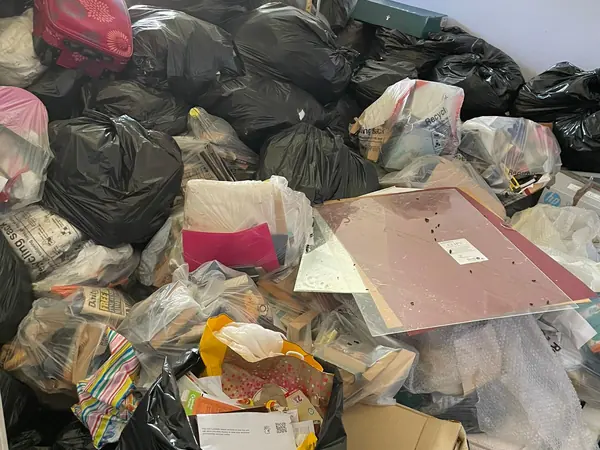
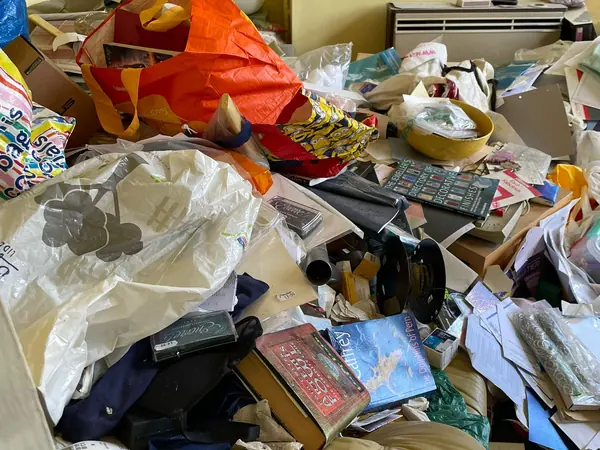
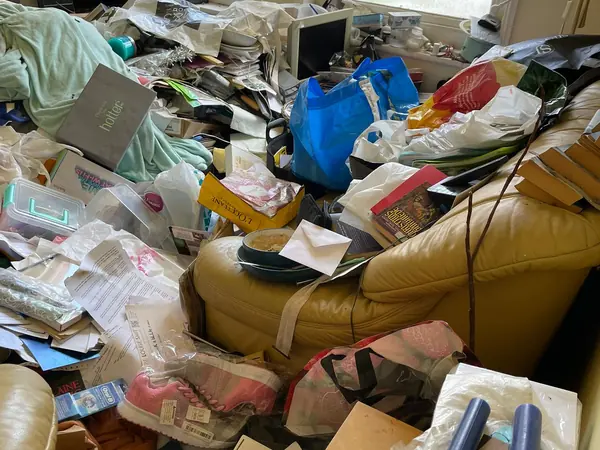
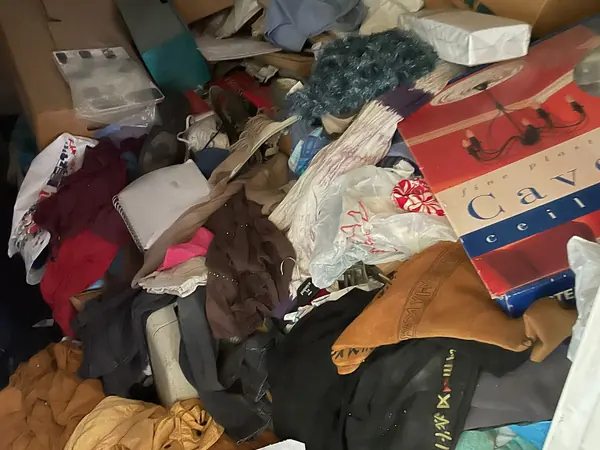
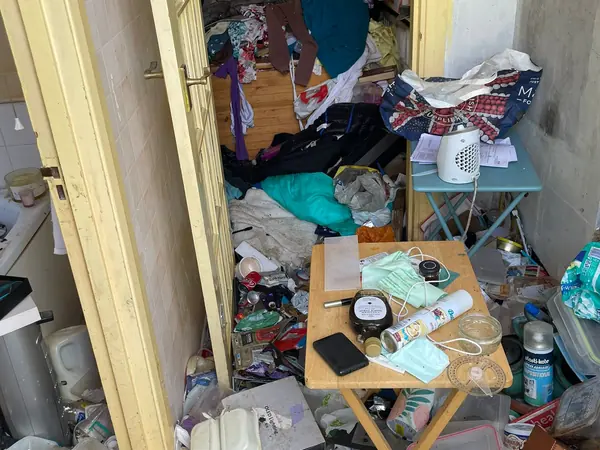
Houses that have got badly overfilled are a longer day and more runs, and hoarder house clearance is a large share of what we do here. Nobody on the team passes comment. We ask two plain questions first — anything hazardous, any sign of vermin — so the van comes stocked and the hours are allowed. Then it is room by room, textiles bagged apart, and a careful watch for the money and paperwork a full house swallows. There is more on the hoarder house clearance page.
Flat clearance and end of tenancy clearance in Swansea
Flat clearance in SA1 and SA2 is its own job: a shared street door, a stair a sofa was carried up in pieces years ago, and a landing nobody's allowed to block while you work. Tell us the floor and the access and the right number of hands turns up. End of tenancy clearance runs to a different clock — landlords and agents with a check-out date that will not move, a property to be swept and empty by a particular morning, and keys back the same afternoon.
Garage and loft clearance in Swansea
Garage and loft clearance is a booking in its own right, without the house attached. The interwar stock across SA5, SA6 and SA7 nearly all has a hatch on the landing and a garage at the side, and both hold more than anybody remembers.
What we need from you to book
Ring the office on 0800 046 5555 with the postcode and how many bedrooms. Say whether a loft, garage or garden is going as well, and roughly how full it is. Photographs are better still — a few of each room, one of the loft hatch and one of the street. You will get a figure back before anyone commits to a date, and a written estimate after the team leader has walked the property on the morning. A three-bedroom house is usually a day; bigger or fuller ones run into a second.
Common questions
How long does a house clearance Swansea job take? Most three-bedroom houses are a single day, start to finish, with the van going out and coming back. Add a loft that has never been emptied, a garage, or a garden like the Llangyfelach one and you are into a longer day or a second visit. We will tell you which when we have seen the photographs.
Can you invoice the solicitor, and can it be paid from the estate? Yes. On a probate house clearance we invoice the solicitor, the executor or the estate directly, and payment can be made from estate funds once they are released. No deposit is taken beforehand.
Do I have to be there? No. Plenty of our Swansea clearances are done with a key from a neighbour or an agent, and the photographs before and after are the record. If you would rather be there for the first hour to point out what stays, that works too.
Can you do the garden as well as the house? Yes, and often it is the garden alone — furniture, pots, a chiminea, brambles cut back. Say at the booking stage whether there is an outside power point or a socket we can reach with an extension, because it changes what the team brings.
What happens to things that could still be used? They go to reuse where anyone will take them, and the rest to a permitted transfer station with a waste transfer note we can send you. Nothing is fly-tipped, ever.
Do you clear flats in the city centre? Yes. SA1 flats over shops and the converted villas in SA2 are normal work — it just needs a plan for the stair and the shared hall, and sometimes a bay suspension from the council.
What does it cost? Ring the office on 0800 046 5555 or send photographs and you will get a figure back. We do not publish numbers, because a full four-bedroom house in Morriston and an empty flat in Uplands are not the same job.