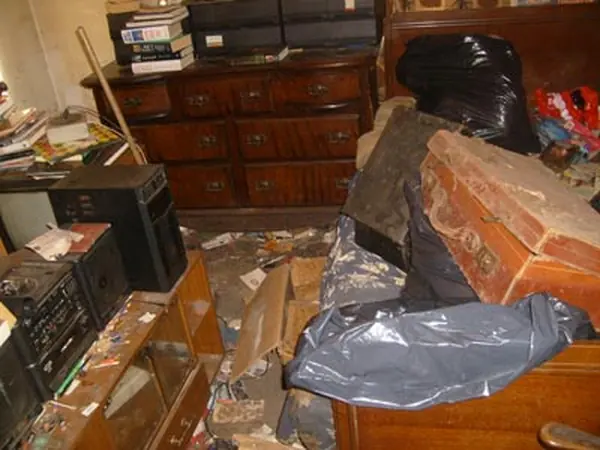
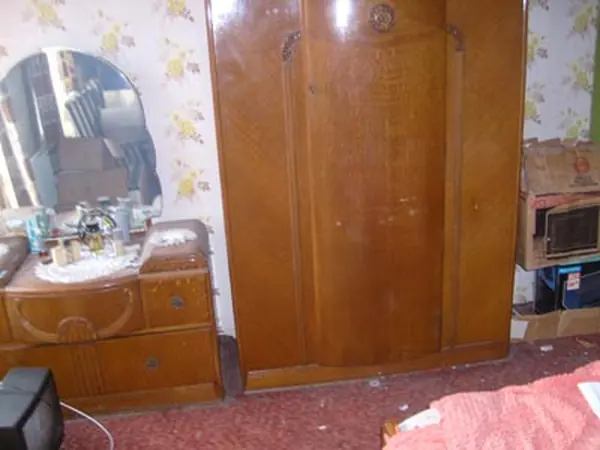
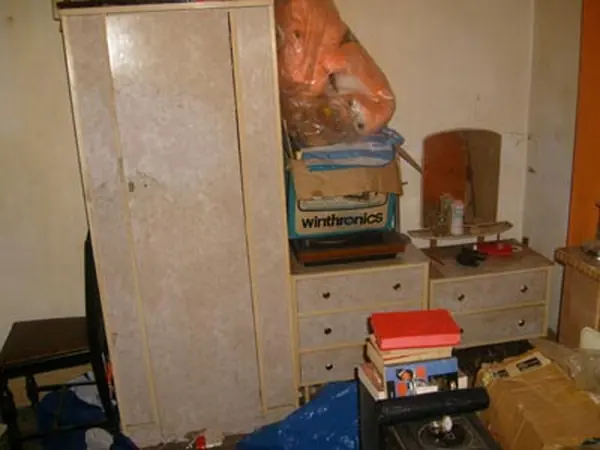
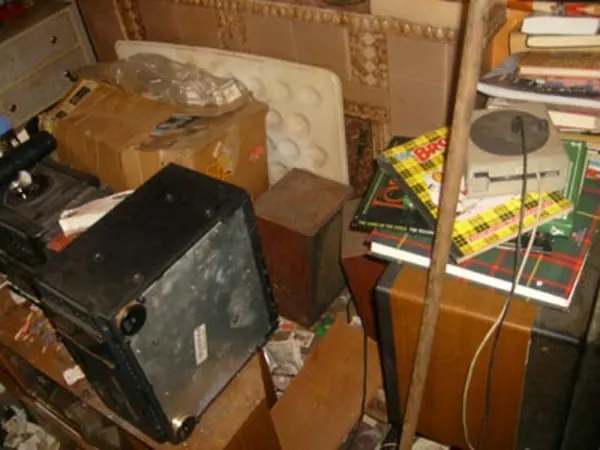
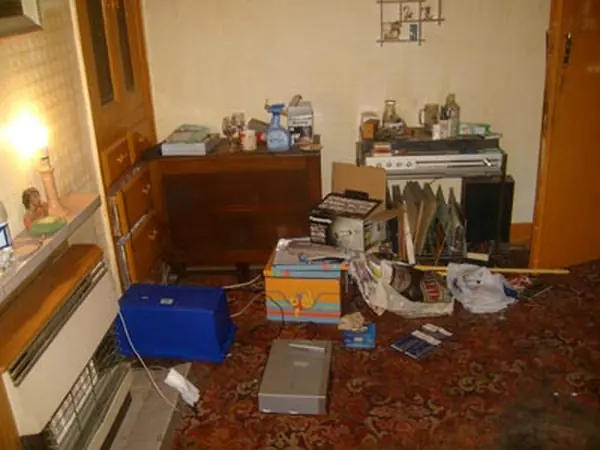
The Amstrad word processor went into the van first. Bridgend, Mid Glamorgan on the older paperwork. Under it on the same table sat a dot-matrix printer with the tractor paper still threaded through, and next to that a beige tower PC with the side panel already off, as though somebody had meant to get back to it. Behind the lot of it were boxes of vinyl. Chanson d'Amour by The Manhattan Transfer, Knowing Me, Knowing You a few sleeves down, Free by Deniece Williams further in again. That was a house at Laleston, CF32, and it took two van loads in a single day.
The person instructing us on that one wasn't in Bridgend at all. They were living in a flat the other side of Cardiff and couldn't keep coming back and forth to meet people at the door, so we did the whole thing in one visit — everything out, a second run the same afternoon, and the house cleaned through once the rooms were bare. They never saw the place full and never saw the van. They saw photographs of empty rooms that evening. A fair number of our house clearance jobs in Bridgend run exactly like that.
The stuff nobody quite knows what to do with
Houses in this part of the county borough often hold three decades of technology in one back bedroom. That Laleston job certainly did. Carrier bags of cassettes, some labelled in biro and some not. Spindles of burnt CDs, the sort that were meant to be a backup of something and then never were. A shoebox of holiday photographs.
The photographs did not go in the van. That's a standing rule with us, not a favour — paperwork, photographs, anything that looks personal or looks like it might matter to somebody gets set aside on a worktop and pointed out before we finish, and if the person who booked us isn't there we ring and ask. Old computers are the same in a different way. Hard drives and word processors get handled as electrical waste rather than tipped loose, because they aren't allowed to go in with general household waste and because there's usually somebody's life still sat on the disk.
Two days at Pyle
The second Bridgend job in our file was out at Pyle, CF33, and it was booked by a solicitors' office in the town centre rather than by a family member. That's normal here. That one ran two days with three men on each of them, which tells you most of what you need to know about the house: there was simply more in it than three pairs of hands could move between nine in the morning and the tip gates closing. Cupboards, wardrobes, a loft. We came back the following morning and finished it.
Probate work is a large share of the house clearance Bridgend sends us. An elderly parent's house, a solicitor winding the estate up, sons and daughters who moved to Cardiff or Bristol or further and can't take a fortnight off to empty a three-bedroom semi a carload at a time. So it's worth saying plainly how the paperwork side runs, because people ask and are often embarrassed to.
We invoice the solicitor, the executor or the estate directly. You don't have to pay it out of your own pocket and then claim it back — if probate is being handled by a firm, the invoice goes to that firm and the payment comes out of the estate. There is no deposit and nothing to pay before we start. The clearance happens, you look at the empty rooms, and the invoice follows afterwards. If a grant of probate hasn't come through yet and the account has to sit for a while before it can be settled, tell us when you book; it's common and it isn't a problem. Executors who want the waste transfer notes for the estate file can have them too — some solicitors ask for them as a matter of course, and it takes a few working days for the notes to come back to us.
Probate house clearance in Bridgend, flat clearance and end of tenancy work
Probate house clearance is the larger half of what we do here, and the paperwork side is set out above. Flat clearance is the other regular booking: the blocks around the town centre share a front door and a stair, rarely have a lift, and are planned around the carry rather than the contents. End of tenancy clearance comes from landlords and agents across CF31 and CF32, usually with a check-out already in the diary, and is often a half day rather than a full one.
Garage and loft clearance in Bridgend
A garage and loft clearance on its own is a normal booking. The loft with the ladder missing, the garage that has not had a car in it for years, the shed at the bottom of a village garden out at Laleston or Pyle. Name all three when you ring — on a Bridgend house clearance they decide the number of loads more often than the rooms do.
Where a Bridgend house clearance load actually goes
Nothing is dumped. Furniture with life left in it — a wardrobe that isn't chipboard, a decent dining set, kitchen equipment that still works — gets offered on to charity shops and reuse schemes before it ever reaches a tip queue. What's genuinely finished with goes to a permitted transfer station where it's weighed in, sorted and documented.
A few things we cannot put in the back of the van with the furniture, and it's worth saying before the day rather than on it. Tins of gloss and emulsion, patio gas bottles, old car batteries, asbestos sheeting off a garage roof. Those are separate regulated streams and have to be arranged on their own. Fridges and freezers count as hazardous waste because of the gas sealed in them, so they can't be tipped in with the rest and go off on their own route to be degassed properly. Since the POP rules came in, upholstered furniture can't be crushed in with general bulky waste either — sofas, armchairs, padded stools and divan bases have to go for incineration separately, and mattresses are handled on their own as well. None of that is us being awkward. It's what the law now requires of anyone carrying the stuff.
What a house clearance day here looks like
We start at nine at the property. Somebody meets the team, walks them round every room including the loft, the garage and anything sat out in the garden, and says clearly what stays — the fitted appliances a buyer has asked for, the curtains, a bed that's being given to a neighbour. That conversation takes five minutes and saves an argument later. Then the team gets on with it, and on a house that size you'd usually expect the rooms to be empty by mid-afternoon, with a sweep through at the end.
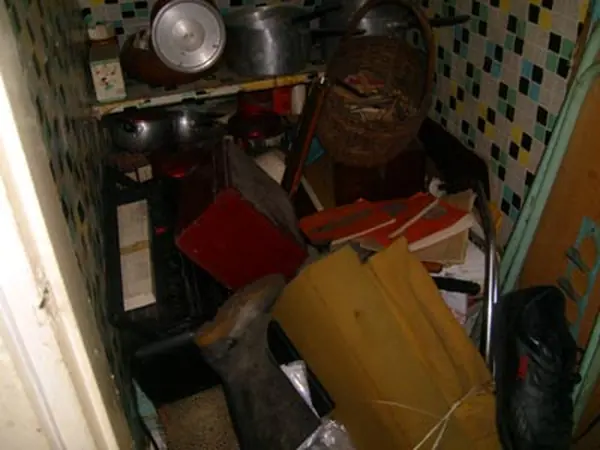
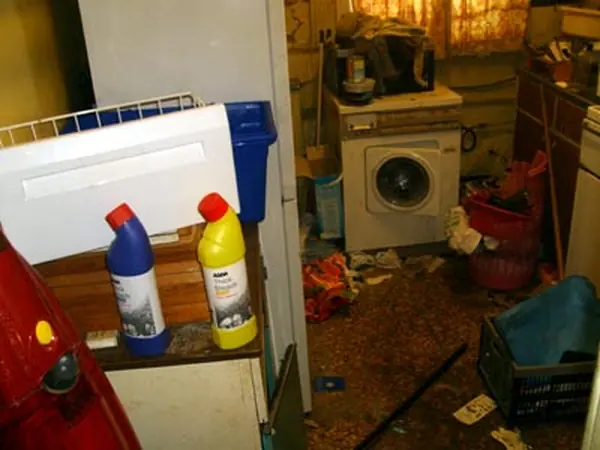
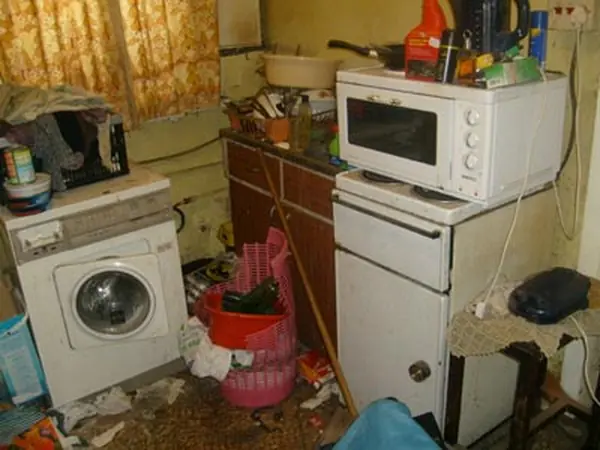
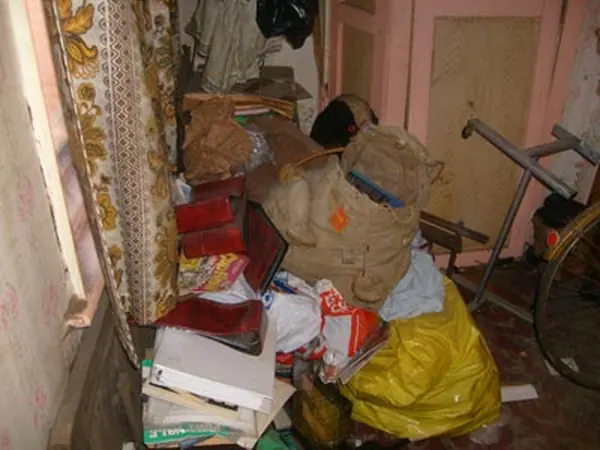
Rooms packed to the picture rail are not a problem and not a conversation we make awkward. Crews here have emptied houses where you had to shift things to get a door open, and they get on with it. If there's decaying food, animal mess or vermin involved, tell us honestly when you book — it's different kit and a different sort of day, and finding out at nine in the morning helps nobody.
Access, parking and getting about
Bridgend is a mixed bag for access. The terraced streets around the town centre and up towards Cefn Glas are tight, with parking on both sides and no room to swing a Luton, so the team may need to walk items a little further to the tailgate. Brackla and the newer estates are easier — driveways, wider turning, a van can sit outside. Laleston and Pyle are village-scale, and out towards Kenfig Hill and North Cornelly the lanes narrow again.
We come in off the M4 — junction 35 for Pencoed, 36 for Sarn, 37 for Pyle and Porthcawl. If you're travelling in to meet us, Bridgend station sits on the South Wales main line with direct trains from Cardiff Central and Swansea, and the Maesteg branch calls at Wildmill, Sarn and Tondu if you're coming down the valley. Pencoed has its own station too.
Bridgend County Borough Council runs household recycling centres for residents' own cars, and they do a reasonable job, but they aren't set up for a houseful going through in one morning and they won't take trade loads. That's the difference between borrowing a neighbour's estate car for a fortnight and having three men and a Luton for a day.
The ground we cover for house clearance around Bridgend
CF31 for the town itself, Brackla, Bryntirion, Cefn Glas and Coity. CF32 for Laleston, Aberkenfig, Tondu, Sarn and Bryncethin. CF33 for Pyle, Kenfig Hill and Cornelly. CF35 for Pencoed, Coychurch, Brynna and Llanharan. We also take work in Porthcawl, Maesteg and across towards Ewenny and Ogmore-by-Sea, so a house clearance in Bridgend and one in a village ten minutes down the road are the same job to us.
We're registered as a waste carrier under the Environment Agency scheme, registration number CBDU419679, and you can check that on the register yourself. The teams are insured, and if a managing agent or a landlord needs the certificate before we set foot on the property, ask and it comes over by email. We've been clearing houses since 2007, and a good deal of that in this corner of south Wales.
Booking a date
Ring the office on 0800 046 5555 and describe the house room by room — how many bedrooms, whether the loft is full, whether there's a garage or a shed, whether the white goods are staying for a buyer. If it's easier, send photographs through the form on this page instead; a dozen pictures taken on your phone from the doorway of each room tell us more than a paragraph does, and we'll come back to you with a figure for the house clearance either way.
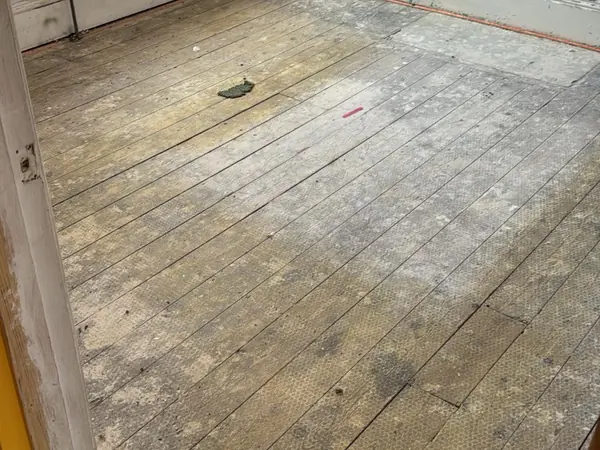
If you can't be there on the day, we'll collect a key from a neighbour, a solicitor or an agent, and you'll get photographs of the empty rooms before we leave the street. Executors living at a distance take us up on that most weeks. It's the same arrangement the Laleston clearance ran on, and it's why house clearance in Bridgend doesn't have to mean taking three days off work to stand in an empty hallway.
Where else we work from Bridgend
The neighbouring towns each have a page of their own. House clearance in Porthcawl is out on the coast, house clearance in Cardiff is the city east along the M4, house clearance in Swansea the city west, and house clearance in Port Talbot sits between us and it.
Common questions about house clearance in Bridgend
Who is invoiced on a probate house clearance? The solicitor, the executor or the estate directly. Payment can come out of the estate once probate allows it, and there is no deposit.
Can you clear the property if nobody can be there? Yes. Keys come from an agent, a neighbour or a relative, and photographs of every empty room go back the same evening.
Do we need to sort or bag anything first? No. The team empties wardrobes, drawers and cupboards themselves. Tell us what must stay and it is set aside.
Are the garage and loft part of the job? They are if you say so when you book. Mention the shed too — it is the one people forget.
What won't go on the van? Paint, thinners, garden chemicals, gas bottles and anything that looks like asbestos. Fridges, freezers and upholstered furniture travel, but each on its own controlled route.
How long does a house clearance in Bridgend take? Most three-bedroom houses are done in a day. A very full property, or one with the loft and garage as well, can run into a second.