Most of our house clearance work in Abergavenny starts the same way. This is Monmouthshire — Gwent to everyone who was here before 1996, and south Wales to everyone else. A phone call from somebody holding a set of keys to an NP7 house they had not expected to be responsible for, usually with a completion date already pencilled in. We have been clearing houses since 2007. Licensed carrier, insured, and in most Abergavenny houses the whole thing is a single day's work. Rather than list promises, here is one job out of the file, told properly.
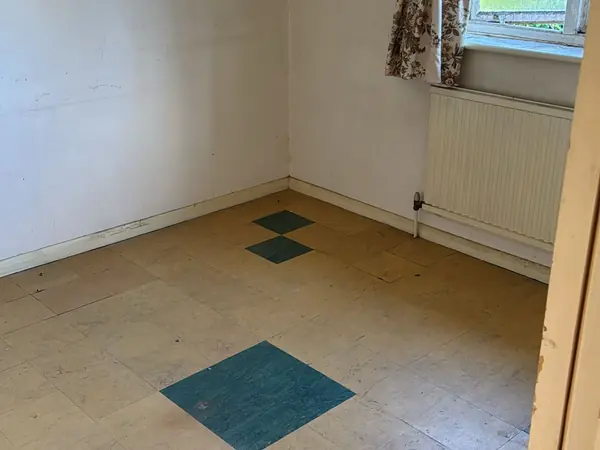
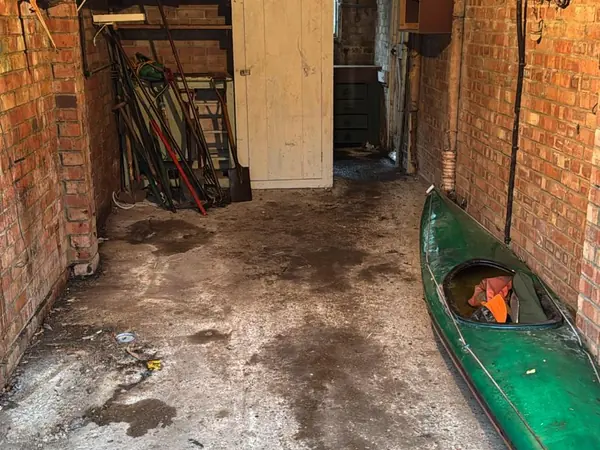
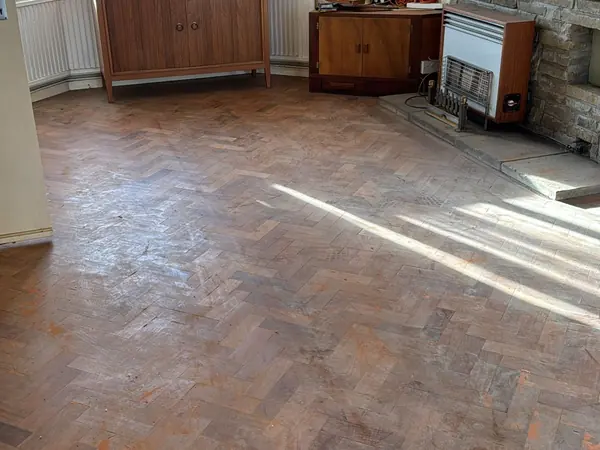
October 2022, a Tuesday. Two-bedroom terraced barn conversion, and an upside-down one at that: the living space on the top floor, the bedrooms underneath. Open-plan dining and sitting room upstairs with a small kitchen and fitted units along one wall, then stairs down to two small bedrooms, a bathroom and a hall space. A garage as well, with a side room off it, which is the sort of detail that decides whether a job finishes at three or at half five. Access was via a small side road with a parking space outside the property — one space, meaning the van sits where you want it and nobody carries a wardrobe up a lane. Water and power were both on, which matters when there is a clean at the end.
The instructions came through by email before we ever set off, and they were the good kind: specific. Carpets were to stay down, curtains were to go. The upright fridge freezer was to be removed, and the cooker with it. Both of those have to be handled under the rules for that sort of appliance, gas extracted before anything is stripped, and you cannot simply chuck them in with the bedroom furniture. No gardening work was wanted. The property was to be cleaned afterwards. In the customer's own words: "Carpets are to remain, curtains to be cleared."
Then the line that the team leader wrote on the back of his sheet, because this is exactly the thing that gets swept up by accident at four o'clock: "The only item to be left is the vacuum cleaner in the sitting area upstairs." It was still there when they locked up. We also had, in writing, "As far as I am aware there is no hazardous or verminous materials in the property" — and that turned out to be true, which is not always the case with garages.
The booking itself had been agreed weeks in advance, and there was a gap in the middle where we heard nothing. The customer came back to check the date still stood rather than assume it had lapsed, with an apology that was not needed: "Apologies, things are a bit manic at the moment." Most people organising a clearance are also organising a funeral, a sale, or both, from somewhere else entirely. She was present at the property on the morning to let the team in and walk them round, and the van met her there at nine.
Upstairs down, downstairs after, garage last. That is the usual order in an upside-down house, because carrying furniture up a staircase to the front door takes longer than carrying it down. You want the heaviest floor cleared while the team is fresh.
Where Abergavenny sits, and how we get to it
Abergavenny is NP7, Monmouthshire, at the point where the Usk valley runs out of flat ground and the hills start — the Blorenge on one side, the Sugar Loaf and the Skirrid on the other. The station is on the Welsh Marches line, Cardiff and Newport one way, Hereford and Shrewsbury the other, and the road in for us is the A4042 up from Newport and Llanfoist. house clearance in Newport is the bigger town of the two and has a page of its own, and it is the run we come up on most mornings.
Around the town we are regularly in Crickhowell, Govilon, Gilwern, Raglan and the villages up towards Llanvihangel Crucorney, and down the valley road towards Usk and Blaenavon. Further off, house clearance in Monmouth, house clearance in Pontypool and house clearance in Chepstow sit in their own postcode districts and have pages of their own rather than a claim on this one. Waste rules and bulky-item collections in the town are Monmouthshire County Council's. Ours is a commercial licence, which is a different thing, and it means a whole house does not have to be broken into fortnightly kerbside portions.
Within the town itself, house clearance in Abergavenny means Mardy and Llanfoist as often as it means the centre, plus Llanwenarth, Pen-y-fal, Hardwick and the newer estates out past the hospital. The lanes towards Llanddewi Skirrid and Pandy count too — a farmhouse forty minutes off the A465 is still a day's work, it just needs a different sort of planning.
Georgian fronts, narrow backs
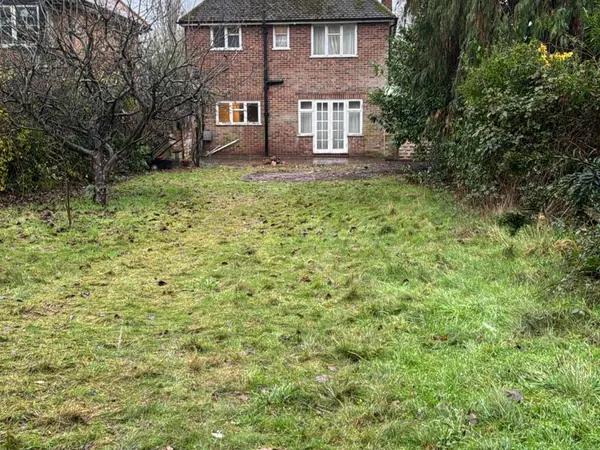
The houses set the pace of the day here more than the contents do. The town centre stock around Frogmore Street and Monk Street is old. Stone and render, deep and narrow, stairs that turn twice, a back lane you can just about reverse a Luton into if nobody has parked across it. Then there is the post-war and 1970s ring out towards Mardy and Llanfoist, which is easier: driveway, garage, garden gate wide enough for a wardrobe. And there are the farmhouses and converted barns out in the lanes, where the house takes three hours and the outbuildings take the rest of the week.
We ask about parking before we book, and we mean it. A team that has to carry a sideboard 200 yards to a legal parking spot is a slower team, and the day gets away from you.
The kinds of house clearance we do in Abergavenny
Probate house clearance in Abergavenny
Probate work is the bulk of it. An executor rings, sometimes from the next street, more often from another county, and the house has to be emptied before the agent can photograph it. We can work from keys, we photograph every room before and after, and anything that looks like it belongs to the estate rather than to the skip gets set aside rather than loaded. Probate clearances also tend to have a deadline attached to somebody else's diary, so we would rather be told the completion date at the first phone call than the day before.
Who we invoice is worth saying plainly, because people ask and are often embarrassed to ask. Where a solicitor, an attorney under a power of attorney, or an executor is administering the estate, we invoice them directly. The paperwork goes to the professional handling it, not to a relative who happens to be nearest. Payment can come out of the estate rather than out of anybody's own pocket. And there is no deposit: nothing is paid upfront, the invoice follows the work once the house is empty and you have seen the photographs of it empty.
Flat clearance in Abergavenny and bungalow clearance in NP7
A flat clearance is not the same job as a house and it should not be booked as though it were. Sheltered schemes and warden-controlled flats in NP7 come with their own rules. A service lift with a weight limit, a bin store that is not for house contents, a manager who needs notice before three men and a van arrive. Most of the flat clearance work we do here is one or two rooms plus a storage cupboard. The whole thing lives or dies on where the van can stand and whether the lift is working. Bungalows are usually straightforward inside and busy outside: a loft you get to on a ladder, a shed, and a greenhouse that has been holding plant pots since the nineties.
End of tenancy clearance in Abergavenny
Landlords and managing agents call us when a tenancy ends badly or ends suddenly. That is furniture, white goods, and whatever was left in the loft, and it usually has to be done between one set of keys and the next.
Garage, loft and outbuilding clearance
Half the calls we get about a garage are really about what is stacked in front of the garage. Lofts, garages, stables and the odd converted pigsty — we will take the lot, but tell us it exists at the quoting stage. A garage found on the morning is the single most common reason a one-day house clearance turns into two.
Single items and part-clearances
We do not only do whole houses. A three-piece suite, a piano, a bedroom set after a bereavement, a bungalow where the family have taken what they want and left the rest — all normal.
Keys, an empty house, and a job finished without you
Not everyone can stand in a Monmouthshire hallway for a day and a half. Executors instruct us this way constantly — from Cardiff, from Bristol, from London, from another country. Keys come from a neighbour, from a managing agent, from a solicitor's reception, and go back the same way, with the arrangement agreed in writing beforehand so nobody is guessing. The invoice, likewise, goes to the solicitor or the executor administering the estate, not to whoever happened to be holding the keys that morning.
We photograph each room before we start and again when it is bare. We send those photographs to whoever is administering the probate, because if you are 200 miles away that is the only proof you have that the job was done properly. As we go we keep an eye out for anything that ought not to leave the house: paperwork, photographs, jewellery, a passbook tucked behind a clock, letters in a biscuit tin. Those get bagged and left for the executor, not loaded. Nobody minds a phone call about a shoebox of documents; everybody minds finding out afterwards that it went.
Where it all actually goes
Furniture with plenty of use left in it goes to a reuse scheme or a charity that will take bulky goods. Beds and sofas are fussier than most people realise, because of fire labelling, but a solid table or a chest of drawers rarely struggles to find a home.
Everything else is booked into a permitted transfer station and weighed in, and a waste transfer note comes back with our name on it. Sometimes that note takes a fortnight to reach us from the recycling centre; when it arrives we forward it, because it is your proof the contents of your house were disposed of lawfully. Our waste carrier registration is CBDU419679, and we hold public liability cover for working in occupied and probate properties.
Sofas, armchairs and other upholstered seating are the exception to ordinary disposal. They count as POP items — persistent organic pollutants, meaning the flame retardants in the foam. And regulations forbid mixing them into general bulky waste, so they are routed to a permitted incinerator on their own ticket, separately from everything else on the van.
There are things we cannot load at all. Half-used tins of paint, gas bottles, car batteries, chemicals from a farm shed, anything with asbestos in it. Tell us on the phone if any of that is in the garage and we will point you at the right disposal route rather than turning up and leaving it behind.
Full houses, cluttered houses, houses nobody has opened in years
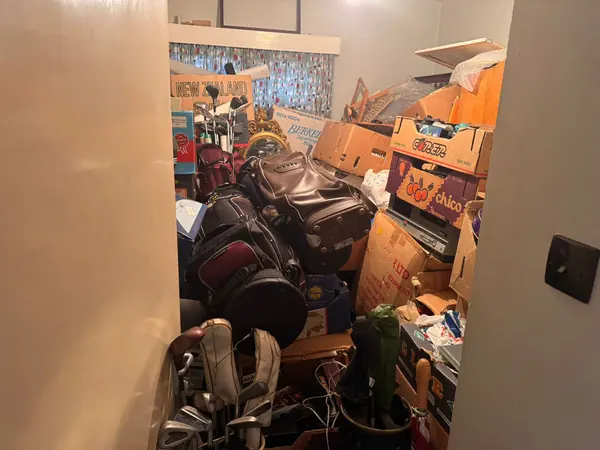
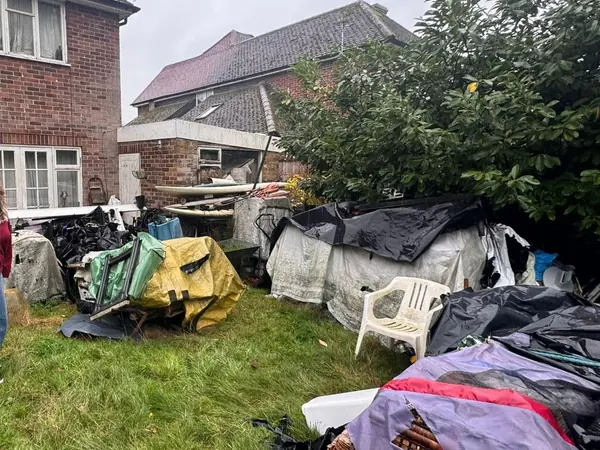
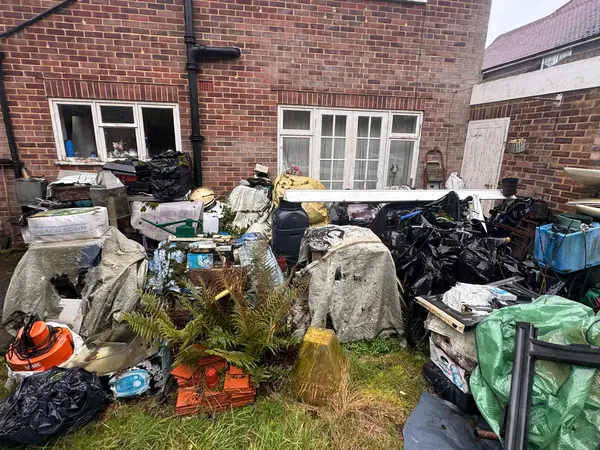
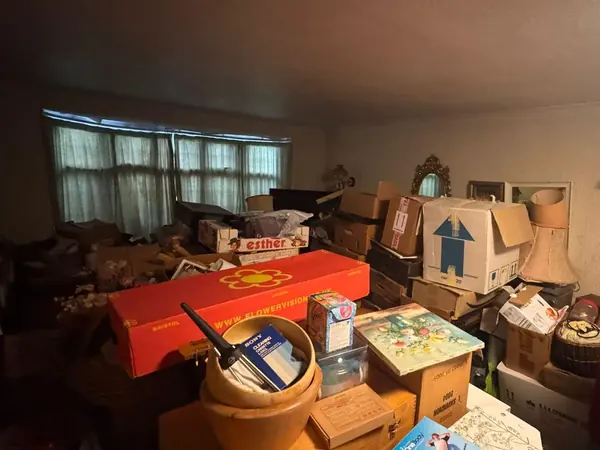
Some of the calls we get here start with an apology. There is no need for one. A house packed to the picture rails, a bungalow with narrow paths between the stacks, thirty years of a workshop in the garage. We take those on and we do not make a performance of it. The teams have seen enough of it across Monmouthshire and the Gwent valleys that nothing in a house here is going to surprise them. They do not discuss what they see once they have driven away.
Hoarder house clearance needs honest planning rather than optimism. Two or three days rather than one, extra loads booked in advance, sometimes a skip permit if the skip has to stand on the road rather than the drive. Tell us what is really behind the door and we will send the right number of men for the right number of days.
Questions we get asked about house clearance in Abergavenny
What does a house clearance in Abergavenny cost? Ring the office on 0800 046 5555, or send photographs of the rooms and outbuildings through the form on this page, and you will get a figure back. We do not put numbers on a web page, because the honest answer depends on how full the house is and how far things have to be carried.
Do I have to be there on the day? No. Plenty of our Abergavenny clearances are done from keys, with photographs of every room sent afterwards. If you would rather be there, that is fine too — most people leave after the first hour anyway.
Can you start before probate is granted? That is for the executor to decide, not us. What we can do is hold a date, take the instruction in writing from whoever is administering the estate, and work to their timetable rather than ours.
Do you take up carpets and curtains? Usually yes, and it is worth saying which you want gone. Some people want carpets left down for a sale and the curtains cleared, some want the opposite, and the team will do exactly what is written on the sheet.
How long does a house clearance in Abergavenny take? A standard three-bedroom house is a day. A cluttered one, or one with a full garage and loft, is two or three. Farmhouses with outbuildings are their own thing and we will say so honestly when we quote.
What happens to anything personal you find? It is bagged and left in the house for the family or the executor. We would rather ring you about a box of papers than throw it away.
Booking a date
Ring the office on 0800 046 5555 or send a few photographs of the rooms and outbuildings through the form on this page. We will tell you how many loads it looks like, whether it is one day or two, and the earliest date we can put a team on your street. On the morning the van meets you at the property. Usually nine o'clock, sometimes later if the traffic on the A465 says otherwise — and in most Abergavenny houses the whole thing is done and the keys are back in your hand before the light goes.