A box of keys sat on the kitchen worktop, and nobody knew what half of them opened. That was the last thing the team flagged at the end of a full house-and-clean in the late spring of 2024, booked by a legal firm winding up an estate, with the person instructing us doing it at arm's length. Two framed pictures were to stay on the wall. A television set bracketed above the fireplace was to stay with the house. Everything else came out. The team leader walked the place first and put it at two to three loads over one day, and that is roughly where it finished. Out went a fridge freezer and a smaller under-counter one, a mattress, a TV and a monitor, and one upholstered item that had to be logged separately. Then the cleaners went through. That is a fairly typical house clearance Liskeard side of the county — estate work, a solicitor instructing, nobody local left to hold the keys.
Afterwards there was a bit of back and forth, as there usually is. A gas fire had been carried out and left round the front of the property rather than taken away, and there were marks on the laminate the cleaners could not shift. We said so plainly instead of hoping nobody looked, sent the finished photographs the same day, and sorted the fire. That is the honest shape of this work. There is the tidy version people picture, and then there is the version where a gas fire ends up on the front path and somebody has to ring about it.
A clearance we took on from a video
Not every job starts with a walk round. One clearance came to us as a video on a phone — a studio unit with a working space behind it, and a heap of waste the person filming it could not put a size to. Fair enough; almost nobody can. That is a perfectly good way to start, and it is the route we suggest to anybody ringing about a house clearance who cannot meet us on site. What we wrote back was this:
"From the video you sent it looks like between 1/4 - 1/2 a load."
Everything came out from the ground floor, went onto a caged tipper van and away for disposal. No lift, no stairs, nothing to be carried down from a first floor — and that detail decides how long a day runs far more than the number of items does. It went down as a single-hand collection, and where a load plainly wants a second pair of hands we say so at the quoting stage rather than turning up short and leaving the customer to help carry. The one thing that could not travel in the general load was refrigeration: fridges and freezers are classed as hazardous waste and have to be handled on their own. That is the law, not a preference of ours.
Where we go
Liskeard sits on the A38 between house clearance in Plymouth and house clearance in Bodmin, each its own district with a page of its own, and the town is PL14. Around it are the villages that make up most of the actual work: Menheniot, Dobwalls, St Cleer, Pensilva, Duloe, St Neot. From there we run down the valley to Looe, east to Saltash, Torpoint and Callington, up the Tamar to Gunnislake and Calstock, west to Lostwithiel, Fowey, Par and St Austell. Further out we cover Launceston, Camelford, Wadebridge, Padstow, Port Isaac, Delabole, Tintagel and Boscastle, and on into Truro, St Agnes, Perranporth, Newquay, St Columb, Penryn, Falmouth, Helston, Camborne, Redruth, Hayle, St Ives, Marazion and Penzance. So the PL and TR postcode areas, and over the Tamar into EX.
Liskeard station is on the Cornish main line, with the branch down the Looe Valley that reverses at Coombe Junction — useful to know if you are coming from away to meet us and would rather not drive. Waste rules for the whole county come from Cornwall Council, which is the unitary authority here; there is no separate district to deal with. Most weeks the van is somewhere in that ring, and a house clearance Liskeard people ring us about rarely means only the streets of the town itself — more often it is a bungalow at Dobwalls or a farm cottage up past St Cleer.
The access question
Cornish lanes are the recurring problem, not the furniture. Granite gateposts set for a horse and cart, a hill, a hedge on both sides, and somewhere at the end of it a house with a courtyard rather than a drive. It is worth telling us the awkward bits when you ring.
On a bungalow clearance we did for a family instructing us from Sussex, the neighbours had been asked in advance to keep the space in front of a garage clear for the day, and photographs of the access road came with the booking email. That is exactly the right way round. On another job the owner asked us to carry everything out through the internal garage, kitchen and utility rather than the front door, because the front carpets had just been cleaned and were staying. Fine by us — we plan the route before we start, not halfway through.
Older terraced places in the middle of Liskeard have their own version of the problem: no off-street parking, a pavement narrow enough that the van has to sit on the corner, and a long walk with every load. It is doable. It is just slower, and we would rather know about it the day before than discover it at eight in the morning.
The order of the day
We start early, because the tip closes when it closes and a load that misses it sits on the van overnight. The team leader walks every room, the loft hatch and the outbuildings first, with whoever is there, and anything staying gets marked then. Then it is upstairs down, room by room, so the landing does not turn into an obstacle course. Soft items and bagged rubbish go first to make floor space, then furniture, then the awkward pieces. A one-day house clearance in Liskeard usually means the van goes out and comes back at least once; a bigger property runs to a second day, and we say so before we start rather than at four in the afternoon.
Probate house clearance in Liskeard: executors, keys and empty houses
A lot of what we clear in this part of Cornwall is probate work, and the person responsible is often two counties away or abroad. That is normal and we are set up for it. Probate house clearance in Liskeard is most of our diary from January through the spring.
We can work from posted keys. On one clearance the executor sent the keys by Special Delivery, we confirmed receipt so the booked date could stand, and the keys went back the same way afterwards with the tracking number kept. He also asked whether the team could read the meters while they were there, to save him a long drive for that alone. They did: the electric and gas readings went over by email the same evening, along with the photographs of the emptied rooms.
On estate work we invoice the solicitor, the executor or the estate directly — whichever suits the person handling it — and the payment can come out of the estate rather than anyone's own pocket. There is no deposit. The invoice follows the work, once the house is empty and you have seen the photographs, and estates in the ordinary course settle when probate is granted. If your solicitor wants the paperwork sent straight to their office with a reference on it, say so when you book and that is where it goes.
If loose cash, jewellery, documents or photographs turn up in a drawer, they are put to one side and you are told. Nothing goes out on a guess. If you want something kept, say so before the day and it will be marked to stay.
Garage and loft clearance, and the rest of the outbuildings
The garage and loft are where a house clearance goes over the estimate, every time. People price the rooms in their heads and forget the roof space. Cornish bungalows in particular tend to have a boarded loft with forty years of Christmas decorations, suitcases, paint tins and a cot somebody's children slept in. Out the back a garage or a stone shed with a mower, garden chairs and a workbench nobody has cleared since the seventies. Tell us the garage and loft are in it when you ring, and we will bring the ladder, the lights and the right number of lads.
What actually leaves the house
Usable furniture, clothing, books and bric-a-brac are offered on to charity shops and reuse projects before anything else happens to them, because a decent wardrobe belongs in somebody's bedroom rather than in a skip. Metal goes for scrap. Electricals go to the WEEE route. Fridges and freezers are handled separately because of the gas in them. What is genuinely finished with is weighed in at a permitted transfer station and the ticket kept on file against your job.
Our waste carrier registration is CBDU419679, held with the Environment Agency, and we are insured for the work. Ask for a transfer note and you will get one. It matters more than people realise — if a load is fly-tipped, the liability chases the householder whose rubbish it was, not just the man with the van. We have been doing this since 2007 and the paperwork has never been the optional part.
Sofas, armchairs and padded dining chairs are the exception to the ordinary load. The fire-retardant chemicals in the foam mean they have to be kept apart from everything else and destroyed on their own paperwork, so they are booked and recorded separately from the rest of the van.
The things we cannot put on the van
Tins of half-set paint in the shed, gas cylinders, engine oil, old garden chemicals, asbestos sheeting off a lean-to roof. None of that travels in a general load, and anybody who says otherwise is going to tip it somewhere it should not be. Tell us what is there and we will say what needs a specialist and what the council household waste site will take.
Pianos, stairlifts and heavy garden machinery we can do, but they need flagging in advance so the right lads and the right kit come.
How the cost is worked out
One answer only, and it is not on this page. Ring the office on 0800 046 5555, or send photographs or a short video through the form on this page, and you will get a figure back for your own property. That is it. Anything you read as a headline number somewhere else is somebody else's house.
Houses that have got away from someone
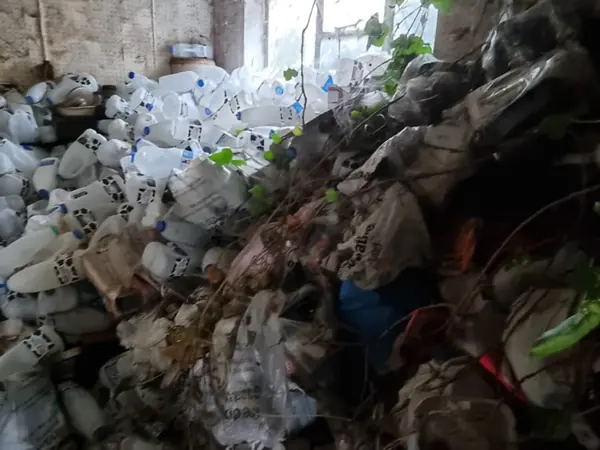
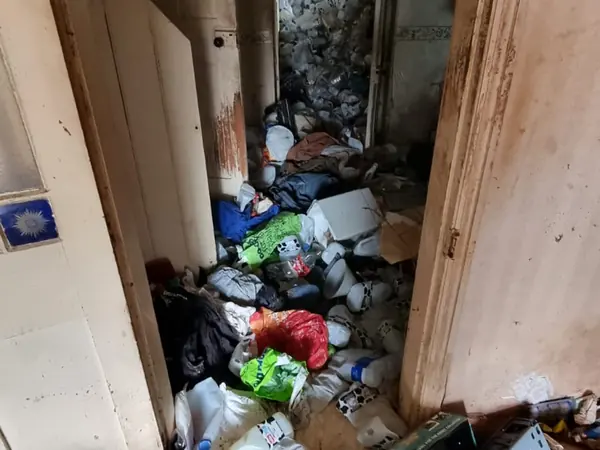
A hoarder house clearance is ordinary work here. Rooms with a path through them, a loft nobody has opened since the seventies, a garage you cannot get the door past. We do not comment on how it got that way, and we do not photograph anything beyond what is needed to record the job. Hoarded properties take longer, need more sorting and sometimes need the pest side dealing with first, and none of that is a reason for anyone to be embarrassed on the phone.
Common questions about house clearance in Liskeard
Do you do probate house clearance in Liskeard, and can you bill the solicitor? Yes. Probate and estate clearances are the bulk of what we do here. We invoice the solicitor, the executor or the estate direct, the payment can come from the estate, and there is no deposit to find beforehand.
Can you clear the garage and loft as well as the house? Yes, and it is better to include the garage and loft from the start than to add them on the day. Sheds, greenhouses and a garden full of pots are the same — mention them and they go in the plan.
Nobody can be there on the day. Is that a problem? No. We work from posted keys, from an agent's keys, or from a neighbour holding a set. Photographs of every emptied room go over the same day so you can see the state the house was left in.
How far out of Liskeard do you come? Anywhere in PL14 and the villages around it, and across the county besides — Looe, Callington, Saltash, Lostwithiel, St Austell, and on west to house clearance in Truro and house clearance in Launceston north of us.
How much does a house clearance in Liskeard cost? Ring the office or send photographs and we will give you a figure for your property. We do not put numbers on a web page, because a number written for someone else's three-bed bungalow tells you nothing about yours.
To book, ring the office on 0800 046 5555 and tell us the town, the size of the property, whether there is loft, garage, shed or garden to include, and anything awkward about the access. We will give you a date and a figure, and we will turn up on it.