House clearance in Falmouth is mostly a question of two things: what is in the property, and whether we can get a van anywhere near the door. We have been doing this work since 2007, we hold a waste carrier licence, and a good half of what we do in TR11 is probate house clearance arranged by somebody who lives a long way from Cornwall. Here is one of ours, and then everything you would sensibly want to know before ringing.
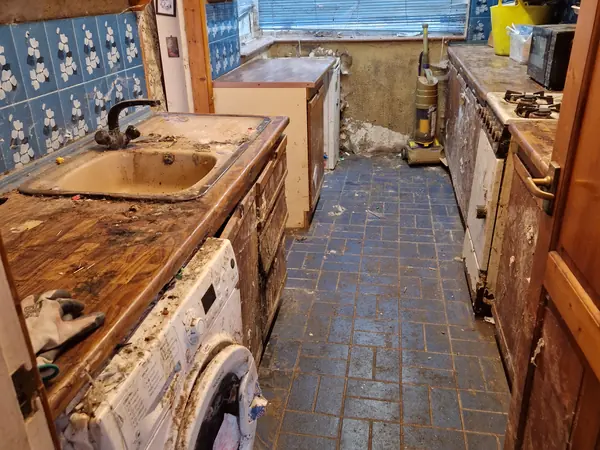
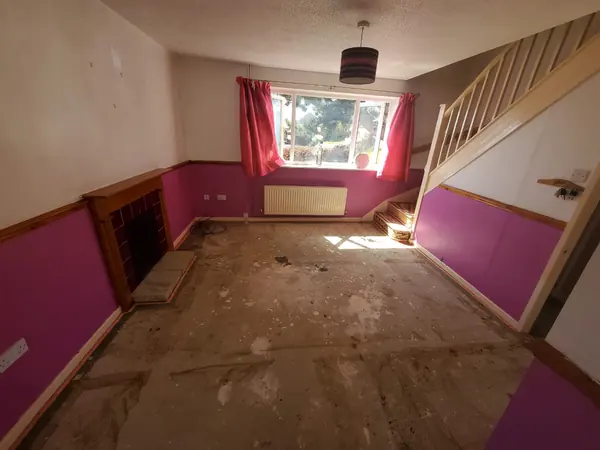
The instructions came through by email a fortnight before, and they were about as thought-out as instructions get. A small two-bed bungalow in TR11 with a shed behind it. Dismantle the bunk beds in the little bedroom. Curtains down and away. Carpets to stay exactly where they were. There was a small upright fridge-freezer in the kitchen that needed taking out, no cleaning wanted afterwards, and nothing to do outside because the back wasn't a garden at all — just a paved courtyard, the sort you get behind half the older properties round here. We booked it for the Tuesday, 29th March 2022, and met at ten.
The bit of that job I still remember is the parking. Whoever wrote those instructions had already gone round the neighbours and asked them to keep the space in front of the garage free for the day — and the garage wasn't even theirs. They'd also photographed the access road and attached the pictures, so we knew before we set off what the van was driving into. That's not fussiness in this town. That's somebody who has tried to turn a vehicle round on a Falmouth back lane.
Getting a van to the door here
Falmouth was built for boats, not Luton vans. The streets that run off the main drag towards the water are narrow, one-way in places, and often on a slope steep enough that you're carrying things uphill to the tailgate rather than down. Old High Street and the lanes above the harbour are the extreme version. Up towards Penmere and Swanpool it opens out and there's usually driveway space, and the post-war estates on the western side of town are straightforward — pull up outside, drop the ramp, get on with it.
So when someone rings us about a clearance in TR11, the second question after "what's in it" is usually "where can we stand the van, and how far is the front door from there". If the answer is forty yards up a pedestrian lane, that's fine, we just need to know, because it changes how long the day takes and nothing else. Loading a full house through a doorway you can park outside of, versus barrowing it round a corner and up a set of granite steps, is a different sort of day, and we would rather know which one it is before we set off.
Falmouth has three railway stations, which is generous for a town this size — Docks, Town and Penmere, all on the branch line that drops down from Truro. Useful to know if you're coming from up-country to meet us at a property and don't want to drive the A39 both ways in a day. The team comes by road regardless.
The kinds of house clearance Falmouth asks for
Probate house clearance in Falmouth
Most weeks, the majority of our TR11 work is probate house clearance — a property that has to be emptied before it can be sold or handed back, arranged by an executor or by the solicitor acting for the estate. We are used to that side of it. We invoice the solicitor, the executor or the estate directly if that is how you want it done, the payment can come out of the estate rather than anybody's own pocket, there is no deposit. The invoice goes out after the work is finished rather than before it starts. If the grant of probate hasn't come through yet, say so when you ring; it is a normal position to be in and it doesn't stop us booking a date. There is a fuller explanation of how we handle estates on our probate house clearance page.
Whoever is dealing with the estate usually wants evidence, not reassurance, so after a probate clearance we send photographs of every room, empty, and we can produce the disposal paperwork for the loads that left the property.
Flat clearance and end of tenancy clearance in TR11
Falmouth has a lot of flats — converted Victorian houses above the town, purpose-built blocks near the seafront, and a good deal of student-let property because of the university. End of tenancy clearance in TR11 is usually a smaller job with a harder access problem: second floor, no lift, a communal stair that other people need to keep using while we work. We bring the right number of hands for that rather than the right number of hours.
Garage and loft clearance in Falmouth, sheds included
Sheds and garages here are damp-weathered and often more full than the house. Lofts too. Garage and loft clearance is where a day here quietly stretches. If a garage or loft is part of it, tell us on the phone — it is the single most common thing that turns out bigger than the photographs suggested.
Hoarder house clearance in Falmouth
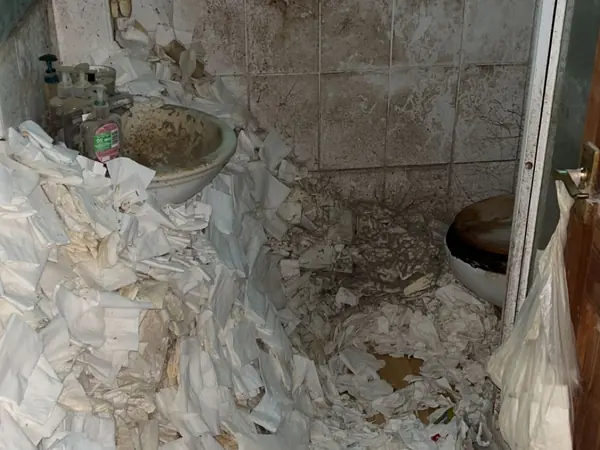
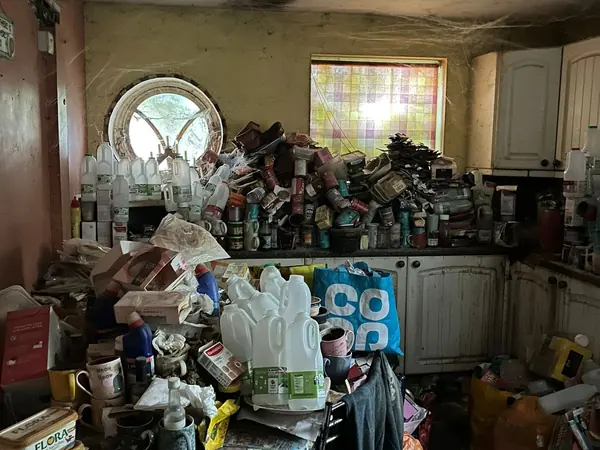
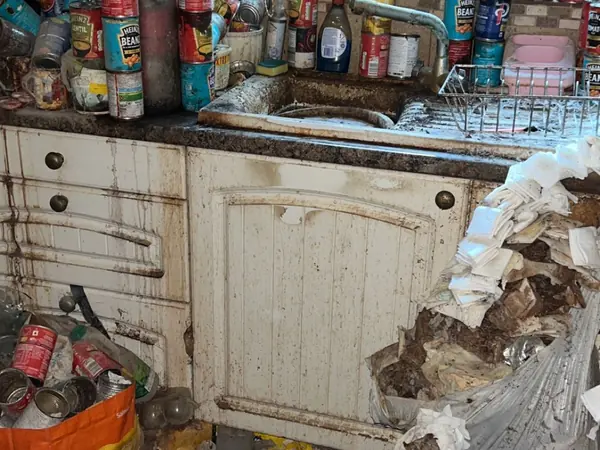
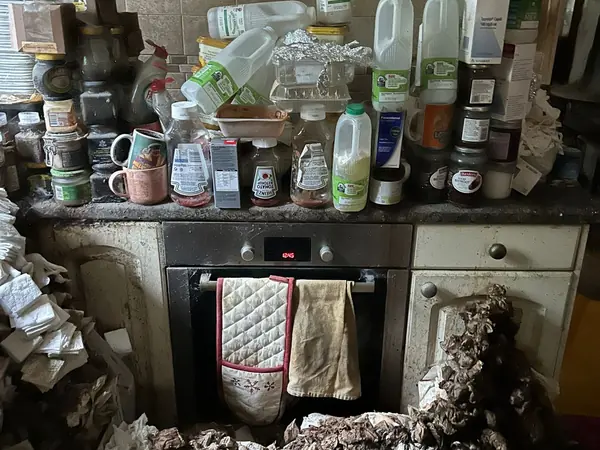
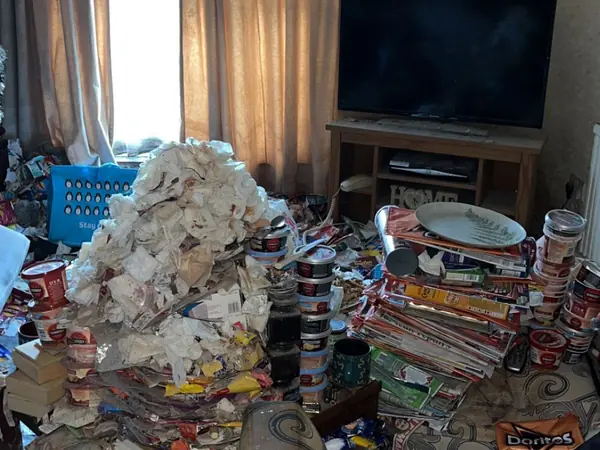
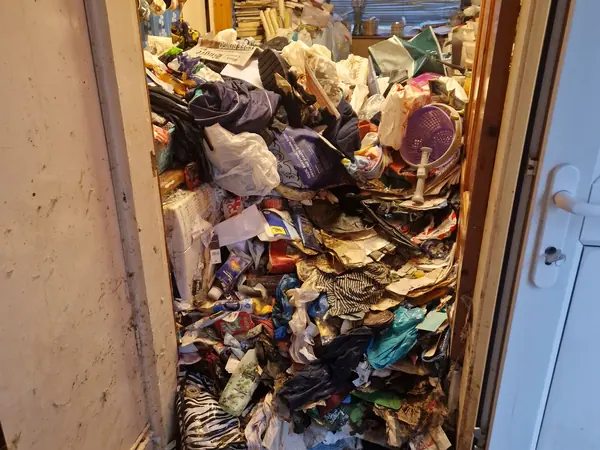
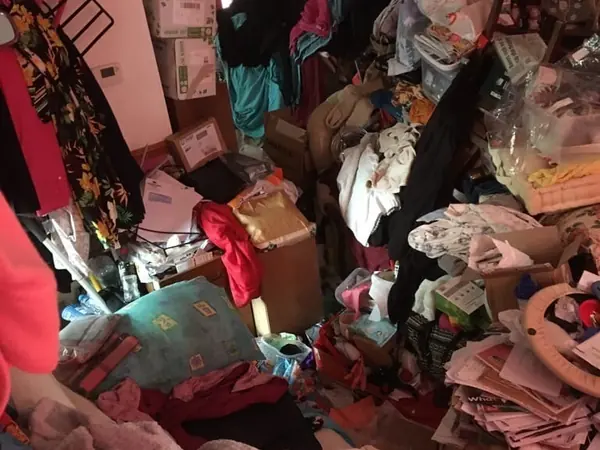
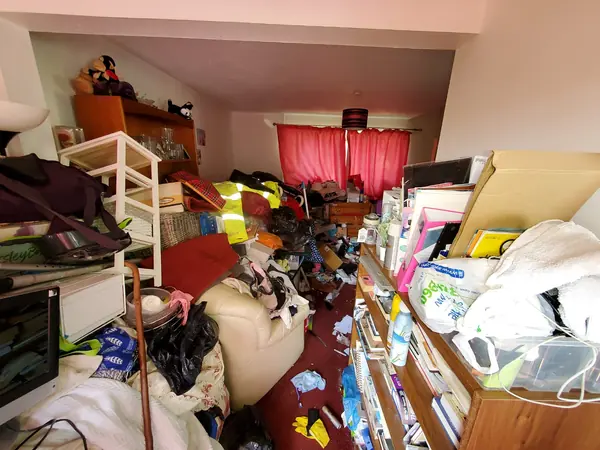
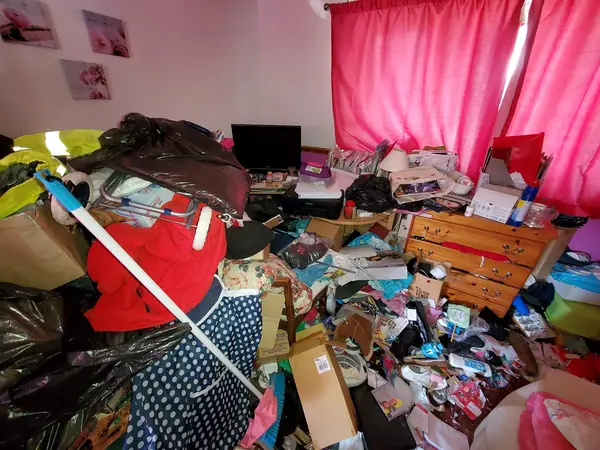
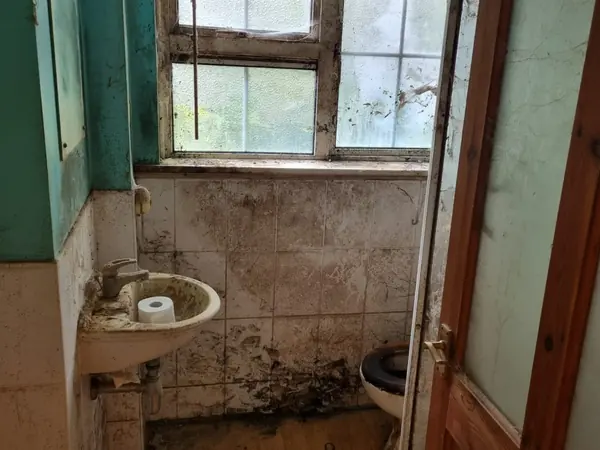
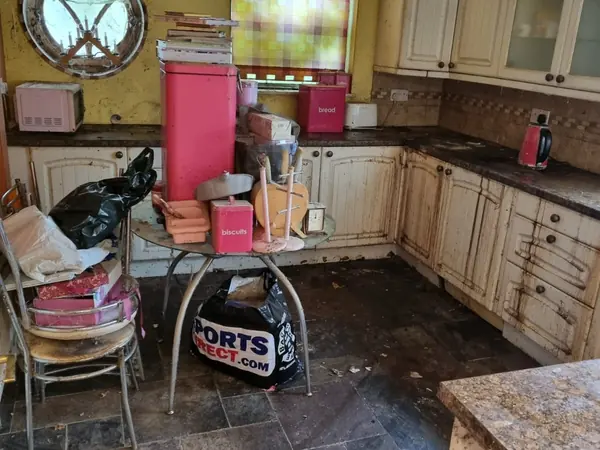
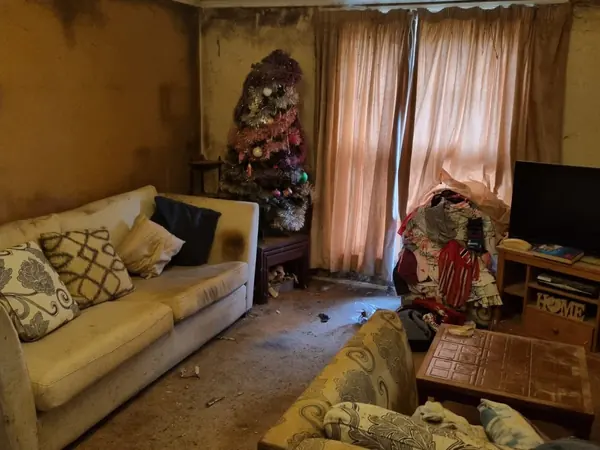
Heavily loaded houses don't put us off. Rooms you can't walk through, forty years of newspapers, a spare bedroom that became storage in 1998 — we've done plenty and nobody on the crew passes comment. Personal papers, photographs, jewellery and cash turn up in these houses all the time; anything of that sort is set aside for you rather than binned, and if you want to check the boxes before they go out you're welcome to.
Instructed from the other end of the country
That March bungalow was arranged entirely from the other side of England. The people responsible for it were three hundred-odd miles away, and a relative met the team at the property to let them in.
This happens constantly in Cornwall, more than anywhere else we work. Somebody's parents retired down here twenty or thirty years ago, and now the house has to be dealt with by children who live in Sussex, or Hertfordshire, or Perth. We're set up for it. If you can't be here on the day we'll work from photographs, and the team leader walks the property first thing in the morning and rings you if what's inside differs from what the pictures showed. Nobody is asked to approve anything from four counties away without being told what it's for.
Keys get posted to us regularly too, by tracked delivery, and posted back the same way when the job's done. We'll take meter readings before we lock up if you ask — it saves someone a very long drive for the sake of two numbers.
What we do with what comes out
Anything still usable is offered on locally first — furniture in decent order, crockery, books, tools, unopened bits from the kitchen. Cornwall has a good network of charity shops and community reuse projects and they'd rather have a working armchair than see it crushed. What can't be rehomed is sorted for material — metal, wood, textiles, electricals, garden waste — and only what genuinely can't be recovered goes for final disposal.
All of it moves under our waste carrier licence, CBDU419679, and every load is booked in and weighed at a permitted site with a paper trail attached to your job. If you ever need to show an executor, a beneficiary or the council where the contents of a house went, we can tell you. On probate work that paperwork matters more than usual, because the executor is answerable to the beneficiaries for what happened to the contents.
Two things slow this down and it's worth saying so. Weighbridge queues at the tip on a Saturday, and charity depots that will only receive between certain hours. Both eat into a clearance day and neither is under anyone's control.
What we won't put in the van
Paint tins, thinners, gas cylinders, old fuel, asbestos sheeting off a shed roof — these need specialist handling and they can't ride in a general household load. We'll flag them on the walk-round and tell you who takes them; the council has a route for most of it.
Sofas, armchairs and other upholstered seating are a separate matter. Upholstered furniture containing persistent organic pollutants can't be mixed with ordinary bulky waste and has to travel to a facility licensed to handle it. It isn't a rule we invented — it's the disposal route the law has required since 2023. Same story with fridges and freezers, which have to be degassed properly. On that Falmouth bungalow the upright fridge-freezer from the kitchen was the only appliance and it went off on the correct stream.
A bigger one, and a paperwork question worth repeating
Not everything is a bungalow and a shed. In May 2024 we cleared a five-bedroom house with an attached barn and more still sitting in outbuildings close to the house. It ran over two days and needed a third load on the second day to finish it. The person organising it was there at the property himself, which is less common than you'd think, and he asked the team on the day about waste transfer documents — they told him those come through head office, which they do.
He came back to us afterwards with a question we get more often than any other: why the waste transfer notes don't carry our own name on them, and where the charges for mattresses and POP furniture are raised and accounted for. Both fair questions, both answered. What he wrote at the end was this:
> "Thank you for the note about possible storage, and the improved photos. Can't say I'm not still curious about why it is necessary to blank out the customer name... but the job is done and I believe I have exercised 'due diligence' so please pass on thanks to Scott & Adam for their work, and help to tidy a few heavy items that were remaining, and thanks also to you for your attention in this matter."
The blanked-out name he is curious about is the reason this page has no names on it either. Waste paperwork moves between operators, and the person whose house it was does not need their name travelling with it.
Where we cover from here
TR11 is the middle of it, and the districts we work through most are the town itself, Penryn, Flushing, Mylor, Budock Water, Constantine, Mawnan Smith and Ponsanooth. Beyond that the same crews cover Helston, Truro, Redruth and Camborne, west through Hayle, St Ives, Marazion and Penzance, and north to Perranporth, St Agnes, Newquay and St Columb. Up the county we cover St Austell, Par, Fowey, Lostwithiel, Bodmin, Wadebridge, Padstow, Port Isaac, Camelford, Tintagel, Boscastle and Delabole, and east through Liskeard, Looe, Saltash, Torpoint, Callington, Calstock, Gunnislake, Launceston and Bude. The TR and PL postcodes, and the EX ones over the Devon border.
Four of those have pages of their own worth a look if your property isn't actually in TR11. house clearance in Penzance and house clearance in Newquay for the bigger towns west and north of us, and house clearance in Redruth and Bodmin for the smaller places inland. If you want the county view rather than a town, start at house clearance in Cornwall.
Questions we get asked about house clearance in Falmouth
What does a house clearance in Falmouth cost? Ring the office on 0800 046 5555 or send photographs through the form on this page and we'll give you a figure. Room-by-room photos on a phone are plenty — you don't need to tidy first, and a picture of the loft hatch and the garage is more use to us than a picture of the lounge.
Can you invoice the solicitor or the executor rather than me? Yes. On probate house clearance we invoice the solicitor, the executor or the estate directly, whichever you tell us, and the payment can come from the estate. There is no deposit, and the invoice follows the work rather than coming before it.
Can you do it if probate hasn't been granted yet? Usually, yes — plenty of executors want the property emptied and marketable while the grant is still working its way through. Tell us where things stand and we'll fit the date around it.
Nobody in the family lives in Cornwall. Does that matter? No. A great deal of our TR11 work is arranged from other counties. A neighbour or an agent can let the crew in, keys can be posted to us and posted back, and we send photographs of every room once it's empty.
Do I have to empty the property first? No. Leave it as it is. If there are things staying — carpets, curtains, a particular chest of drawers — tell us in writing before the day and the team works to that list.
What can't you take away? Paint, solvents, gas bottles, fuel and asbestos can't go in a household load. Upholstered furniture and fridges have their own legal disposal routes and we handle those properly rather than mixing them in.
How do I book? Phone 0800 046 5555, or use the form on this page. We'll want the rough size of the property, where the van can stand, and a few photographs.