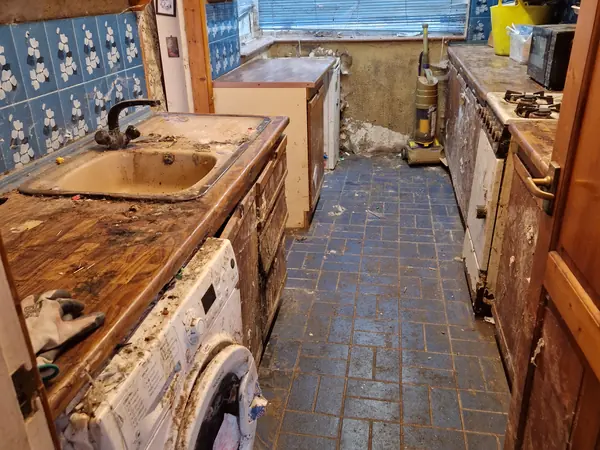
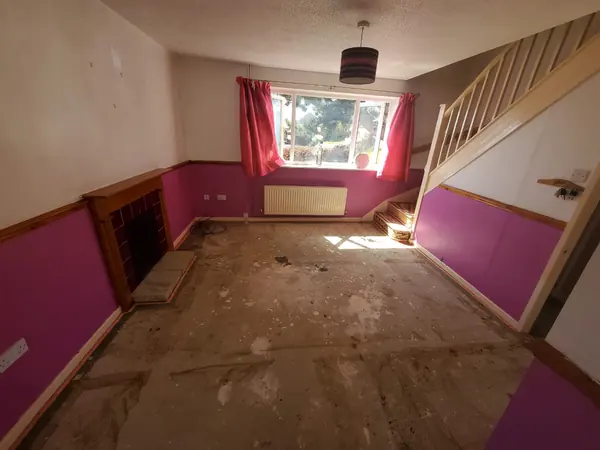
Most weeks there is a van of ours somewhere between the A1(M) and the river, and a fair part of what it is doing is house clearance in Chester Le Street. A four-bedroom semi out towards Newker with the loft still full. A flat above the shops that has to be emptied down the back stairs. A bungalow at Ouston where nobody has lifted the garage door since the nineties. We have been clearing houses since 2007, and this page is a plain account of how that work actually goes in this town. The streets a Luton can sit on, what comes off the load by law, what happens when the person arranging it lives three hundred miles away, and a real job of ours told in full further down.
What actually leaves the house, and where it ends up
People assume it all goes in one skip and away. It doesn't. Furniture that's still sound, crockery, books, unopened bedding, tools. We'd rather it went to a charity shop or a reuse project somewhere in the county than into a compactor, and the lads sort it on the drive rather than pretending to sort it. What's genuinely finished travels to a permitted transfer station and gets weighed and ticketed, so there's a paper trail behind every load that leaves your street. Our waste carrier registration is CBDU419679, and it's worth checking anybody's number before you let them load a van. Fly-tipped bags with your old post in them come back to you, not to the man who took them. Every house clearance in Chester Le Street leaves the same way, whether it's four rooms or fourteen.
Two things we can't put in with the general load. Fridges and freezers hold gas and have to be handled on their own. A small under-counter freezer and a big American-style unit both come off the main load and go where the gas can be dealt with properly. And sofas, armchairs, ottomans, dining chairs with padded seats — the foam in them falls under the POP rules, so they travel separately and are destroyed under a separate permit. A customer once asked us straight out whether a three-piece suite and an ottoman still counted if they came apart. They do. Every upholstered piece is handled on its own, and we'd sooner tell you that on the phone than at four o'clock on the day. Paint, aerosols, gas bottles and garden chemicals are the other group. They come out of the ordinary load entirely, and if there's a gas bottle behind the shed door we want to hear about it before the van's loaded rather than after.
Getting a van to the door in DH2 and DH3
Chester Le Street is easier than most of the North East for access, and we say that having tried the alternatives. The A1(M) runs straight past at junction 63, so a team coming down from Newcastle or up from Bishop Auckland isn't crawling through anything. Front Street is pedestrianised through the middle, so the flats above the shops are done from the back lanes and the service yards. We'll want to know which end of the row you're on before the day rather than at nine in the morning. The 1930s semis out towards Newker and Chester Moor usually have a drive or a wide verge.
The older terraces at Pelton Fell and the streets behind the Riverside can be tight, especially when there's cricket on and half the town has parked up. Great Lumley, Bournmoor and Waldridge are mostly fine. Ouston, Urpeth and Grange Villa over in DH2 are open enough for a Luton to sit outside the door. If a load has to be barrowed more than fifty yards, that eats into the day and we'd rather plan for it than find out about it.
A house clearance in Chester Le Street normally starts at nine. The team leader walks the whole property first — every room, the loft hatch, the garage, the shed at the bottom of the garden — and photographs it before anything moves. Then the heavy furniture goes out while the van's empty and the arms are fresh; bagged waste and soft goods go last, because they'll fill whatever gap is left. Carpets and underlay come up if you want them up, and the floors get swept through. A four-bedroom house with a loft and a garage will usually need two loads on the same day, which means the van running out to the transfer station and coming back. That's a good part of an hour gone in itself. Better said at the start than at half five.
The railway station sits below the town on the East Coast Main Line, one stop south of Newcastle and one north of Durham, which matters more than you'd think. A good half of the people who book with us arrive on a train, hand over a key, and go back the same evening. We've met executors on that platform.
Booked from somewhere else entirely
Clearing a house you no longer live near is the normal case, not the awkward one. A fair share of the house clearance work we do in Chester Le Street is arranged by somebody who can't be there to open the door. Solicitors ring us. So do sons and daughters who have not lived in the county for thirty years.
Probate clearance, and one job that took six months to reach a date
One probate clearance of ours was set up entirely by email by two of the family, both living abroad, and it was the best part of six months between the first message and a date in the diary. The grant of probate had come through by post, but the hard copy the bank wanted was still stuck somewhere. As the executor put it: "We have Grant of Probate sent by mail but are still awaiting the hard copy for the bank and they have been slow and unhelpful…" Nothing could move until the two of them were in the country themselves. They flew in for five days in January and the whole thing had to fit inside that window. An auction house had the flat for the whole of one day, taking what was worth taking; we came in after them for everything else.
It was a second-floor flat. There was a lift, but not one you could get a wardrobe into, and the executor asked about it before booking anything: "There is a lift but is not suitable for large and heavy items so they have to be carried downstairs (2nd floor). Is that feasible ?" It is. Carrying a two-seater and a bed frame down two flights is a good part of what the team does. But it changes the shape of the day, and that's exactly the sort of question we'd rather have in writing a month early than shouted up a stairwell at nine in the morning.
The instruction itself was clear enough once it came: "Everything must be removed bar the fixed items i.e built in cupboards and free standing items in the kitchen. Carpets need to be ripped out.Flat must be cleaned," So the built-in cupboards stayed where they were, the free-standing bits in the kitchen went, the carpets came up, and the place was cleaned afterwards. The executor had also sorted a parking suspension with the council beforehand so the van wasn't a hundred yards down the road, which saved more time than anything else we did that week.
They asked one more thing, half apologising for it: "Would photos of the premises be helpful??!" They always are. Photographs before, photographs after. For anybody who can't stand in the room themselves, a picture of bare floorboards is the only proof that counts.
Where a solicitor, an attorney or an executor is handling the estate, we take our instructions from them direct and nobody in the family needs to attend at all. We've done house clearance in Chester Le Street where not one relative ever saw the property — key from an agent in the town centre, photographs by email, keys back the same afternoon.
What a day costs
Ask us, and ask early. Send photographs — room by room, doors open, cupboards open, nothing tidied up first — and we'll tell you what we think the job is before anybody's committed to anything. The estimate is free and it doesn't oblige you to book us. On the day, the team leader walks the house before the first item moves and tells you there and then if he thinks it's more than we said. Nothing gets added quietly behind your back, and nobody starts loading until you've heard it.
Ring 0800 046 5555 and describe the house, or use the form on this page. Tell us how many bedrooms, whether the loft's been emptied or nobody's been up there since the nineties, whether there's a garage or a shed, whether there's a fridge or a freezer, whether the carpets are coming up. Whether there's anything in there you want held back. That's most of what we need to know before we send a team out. The questions people are embarrassed to ask — how bad is too bad, what will the neighbours see — are the ones we get asked most.
Full houses, sheds, lofts and the rest
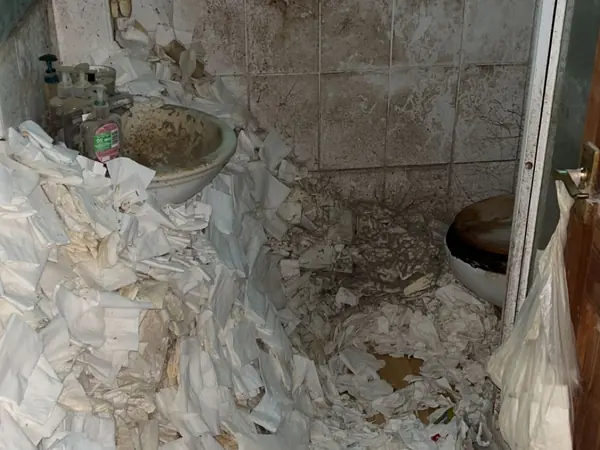
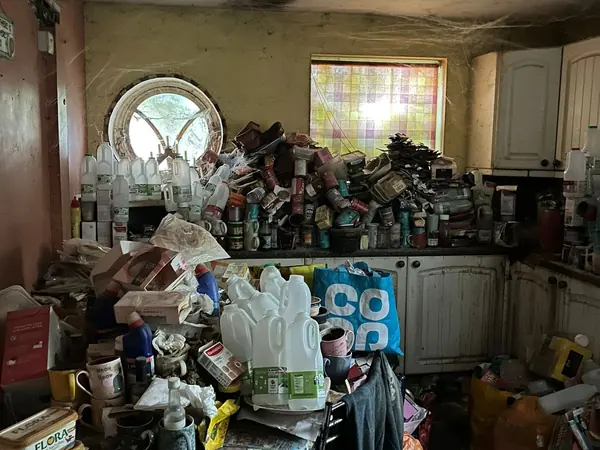
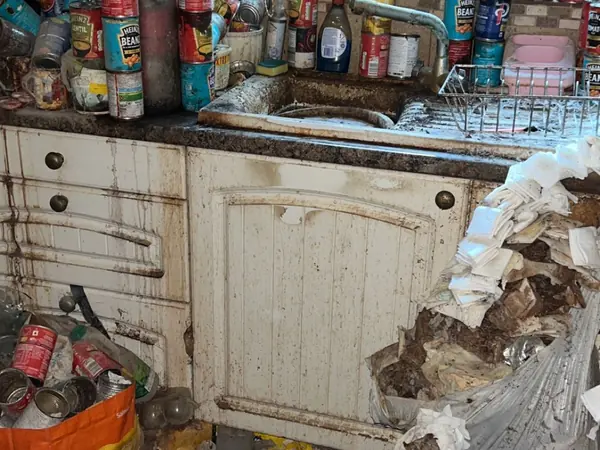
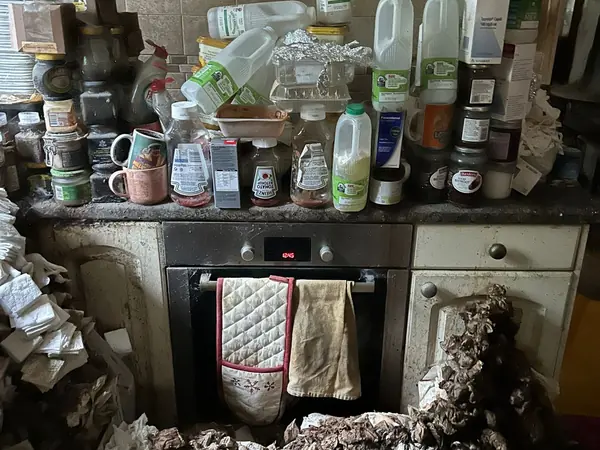
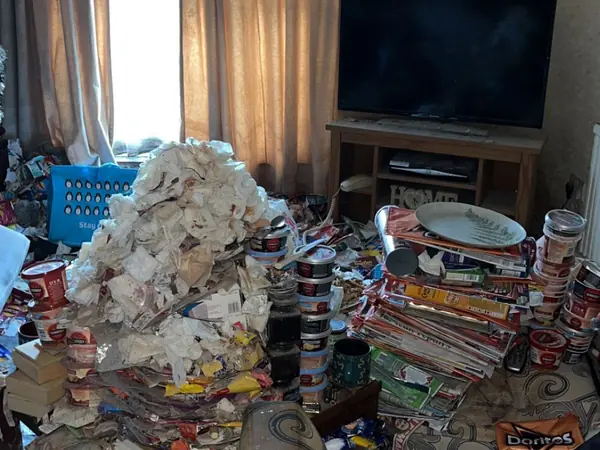
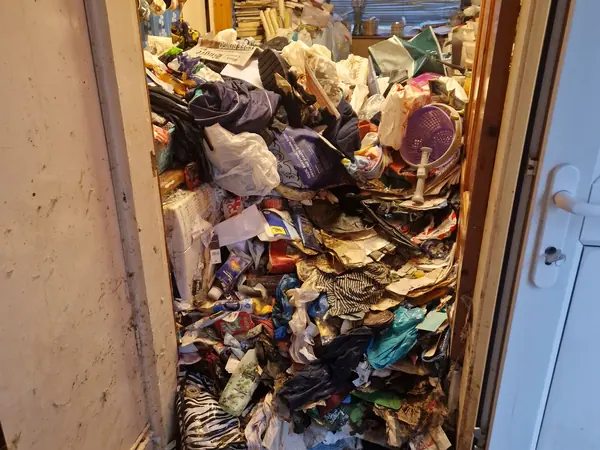
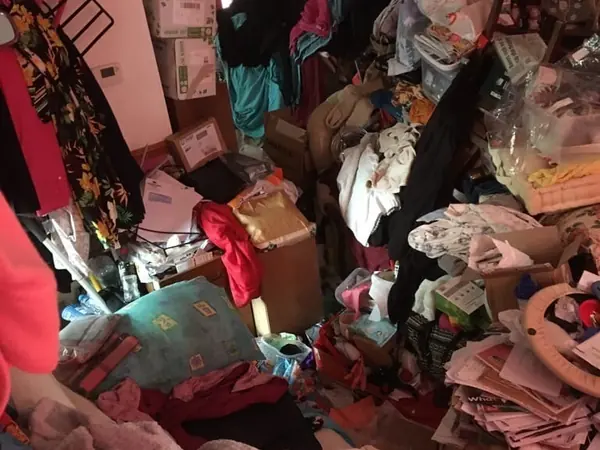
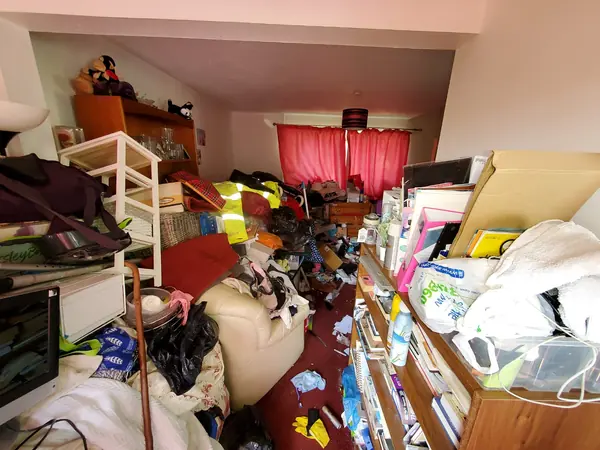
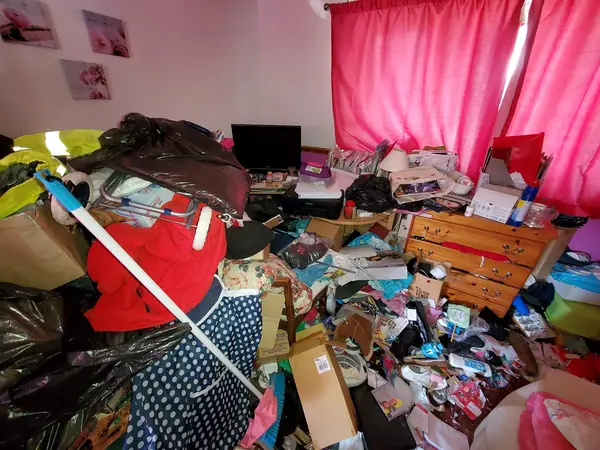
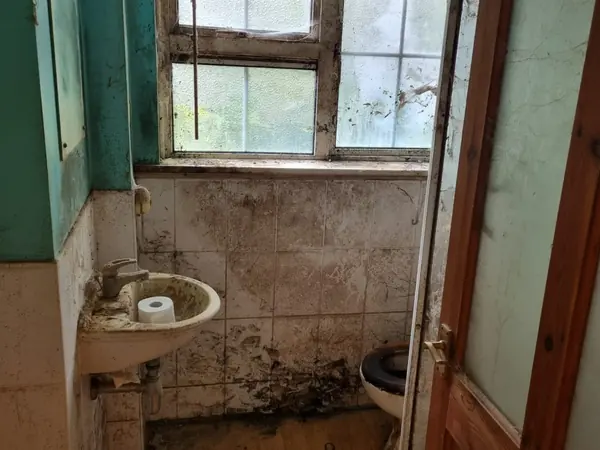
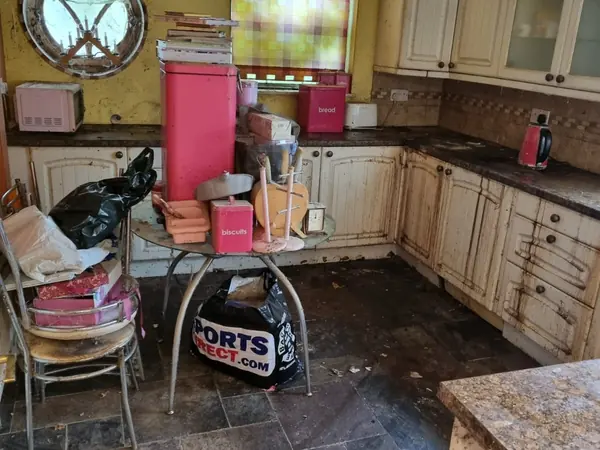
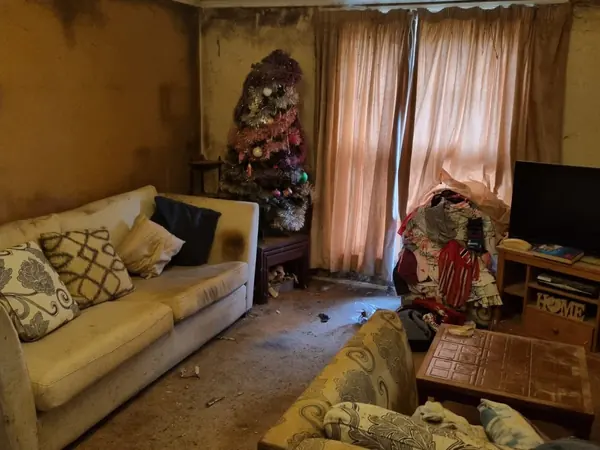
Some properties have forty years of belongings in them and every cupboard packed to the ceiling. We do a lot of those. Hoarder house clearance in Chester Le Street is a regular part of the week, and it's the part the crew are best at. Nobody comments, nobody photographs anything they shouldn't, and the lads have seen enough not to be surprised by any of it. Where there's cash, jewellery or paperwork likely to be buried in the clutter, tell us before we start and it comes out to one side for you rather than into a bag.
Flat clearance in Chester Le Street
A flat clearance is its own kind of day. Stairs, a shared landing, a lift that may not take a wardrobe, and a spot outside that is not yours to block all morning. We plan the carry route before anything is lifted, and on the sheltered and retirement schemes around the town we sign in with the scheme manager and keep the communal doors clear. A flat clearance in DH2 or DH3 is rarely quicker than a house of the same size, and it wants booking honestly rather than optimistically.
Garage and loft clearance in Chester Le Street
The garage and loft are where a day goes wrong if nobody has looked. Half the semis out at Chester Moor and Pelton have a loft with a hatch and no ladder. A boarded loft with forty boxes on it is an hour of somebody's day on its own, passing things down through a hole. Garages are worse for surprises: an up-and-over door that hasn't lifted since the owner stopped driving, a lawnmower with fuel still in it, shelves of half-used paint tins that come off the ordinary load and go for separate disposal. Coal houses, outhouses, that shed with the roof gone at the bottom of the garden — all of it can go in the same booking, but say so in advance so the day is planned around it. End of tenancy work goes the same way: landlords and agents across DH2 and DH3 use us for the turnaround between tenants, carpets up, cupboards emptied, floors swept through.
The ground we cover
Chester Le Street sits in the middle of our County Durham patch, so DH2 and DH3 are the postcodes on the door, and we work the whole DH area around them. Birtley, Pelton, Ouston, Sacriston and out west, where house clearance in Stanley and house clearance in Consett are handled from the same base. Plus the DL towns south of us: Spennymoor, Ferryhill, Newton Aycliffe, Shildon, Crook and out as far as Barnard Castle, with house clearance in Bishop Auckland on its own page. North of the A1(M) junction we run into the Tyne and Wear boundary, and house clearance in Gateshead is the nearest big town we cover. East of us it's SR and TS for Seaham, Peterlee, Wingate and Trimdon. Household waste here is Durham County Council's; Birtley and the northern edge fall to Gateshead. Estate work is set out on our probate house clearance page, and the heavier jobs on the hoarder house clearance one.
Questions we get asked about house clearance in Chester Le Street
Do I have to be there on the day? No. Plenty of our jobs are done on a key from an agent, a neighbour or a solicitor's office, with photographs before and after by email. If you'd rather meet the team at nine and leave them to it, that's fine too.
It's a probate clearance — can you invoice the solicitor rather than me? Yes. Where a solicitor, an attorney or an executor is instructing us, we invoice them direct, and a probate clearance can be settled from the estate rather than out of anybody's own pocket. Tell us at the enquiry stage who the invoice should go to and we'll set it up that way from the start.
How much notice do you need? Usually a few days, sometimes less if there's a gap in the week. Probate work tends to run the other way — people book us a month out because a completion date or a flight is fixed. Either is fine; ring and we'll tell you honestly what's free.
Is there anything you can't take? Fridges, freezers and anything upholstered come off the main load and are dealt with separately under the rules. Paint, aerosols, gas bottles, garden chemicals and asbestos are not general waste at all — tell us what's there and we'll tell you what happens to it before the van arrives.
Do the carpets and curtains come up? If you want them to. Say so when you book, because carpets and underlay take room on the van and time on the day, and the answer changes how the load is planned.
What happens to things that are still usable? They're sorted on the day and the usable stuff goes to a charity shop or a reuse project where one will take it. The rest is weighed and ticketed at a permitted transfer station, and you can have the disposal paperwork if you want it — executors often do.
If you've got a house to empty, ring and describe it, or send a few photographs — room by room, doors open, nothing tidied up first. We'll tell you how many loads it looks like and what day we can be there. House clearance in Chester Le Street is work we've been doing since 2007, and most weeks there's a van in the town anyway.