Buckingham sits at the top of the county in MK18, and most of the house clearance Buckingham brings us arrives the same way: an executor with a set of keys, a family selling up, now and then a landlord between tenancies. We have been clearing houses since 2007. Below is one real job, told properly, and then a good deal of detail about how a clearance day actually runs — because that is what people ring up to ask about, not the sales talk.
The one that sticks in the mind from last April was a five-bedroom house with a loft, a garage and a shed. A removal firm was taking part of the contents out ahead of us — the things the family were keeping — so what we were left with was everything that had been decided against. Carpets were to remain. Curtains and blinds were to remain as well, and there were no white goods to lift. No cleaning, no gardening, no locked outbuildings to argue about: empty what is left and go. There was a drive, so the van went straight on it, which is not how it usually goes.
And then it did not run to plan. The team booked for the Tuesday had an accident on the way in. Everyone was alright, but the day was gone. We rang first thing rather than let the householder stand at an empty drive wondering, apologised, and put the job to the Friday with an earlier start than we normally offer. Eight o'clock instead of nine — so the whole house still went in a single day. He had built plans around that Tuesday and they went with it. Afterwards he wrote:
"Thanks for arranging an earlier time. Sorry if I sounded unsympathetic earlier on but it was a real dampener on our plans and it was a real upset. Glad that the crew were ok after the accident."
We would sooner print that than a line of praise. Things go wrong in this trade — a van off the road, a crew short, a road closed. What decides whether a customer forgives it is whether they were told at seven in the morning or at half past three. He was moving on himself, as it happened, so the paperwork had to follow him to a second address a week later. That is ordinary for us; people clearing a house are very often mid-move themselves.
What a day actually looks like
We start at nine. The team turns up, walks the property with whoever is holding the key, and photographs each room before anything moves. Then they work through until four or five if that is what it takes. If they get there, look at it properly, and reckon the whole lot will not go in a day, they say so on the spot rather than at half past three when you have already made plans.
One thing worth knowing before you book. When there is more than a single load, the van has to leave the property and drive to a commercial recycling site to tip, and that eats a chunk of the day. So the crew will not be parked outside your house from nine till five solid — there will be a stretch where the street is empty and nothing appears to be happening. It is happening; it is happening at the transfer station.
If a second day is needed we will book a return, usually the following week. Nothing gets abandoned half-finished.
Buckinghamshire jobs, and the odd request that comes with them
Most of what we clear around Buckingham is nineteenth-century town property near the centre, post-war semis on the estates that went up around it, and stone or brick cottages out in the villages — Maids Moreton, Padbury, Gawcott, Tingewick, Water Stratford. The village work throws up the access problems. Narrow lanes, a verge instead of a kerb, a farm gate that will take a Luton but only just, and the occasional cottage where the staircase turns twice and a wardrobe has to come apart on the landing. The town-centre houses are the opposite problem: no drive, a permit bay outside, and a walk from wherever we can legally stop.
The odd requests come with almost every clearance. The commonest is a short list of things the family hope are still in the house — a particular table, a picture, a piece of jewellery in a drawer nobody can name. We look. It costs nobody anything and now and then a thing does turn up behind a wardrobe. On probate work the sentimental items get set aside and handed over or posted on, never tipped, and that is standard rather than a favour.
The second commonest is a locked room. If you want something kept, put it in one room or one outbuilding and shut the door, and tell us which. That single trick prevents almost every argument there has ever been about a clearance, and we recommend it to anyone booking a house clearance Buckingham way, particularly if you cannot be there on the day. If you would rather not be present at all, we can collect the key from an agent or a neighbour and email photographs of the empty rooms afterwards.
Not everything needs a full house clearance, either. Sometimes it is a garage and a loft and nothing else, or a single wardrobe left behind after a move, in which case house rubbish removal is the smaller version of the same job.
Where the load actually goes
Furniture and household goods that are still usable get offered on. Reuse projects and charity shops around the Vale will take a decent sofa or a working dining set, and we would far rather see it go that way than into a skip. Metals, cardboard, timber and electricals are separated at the tip. What cannot be reused goes to a permitted transfer station and comes back to us as paperwork; we forward the Waste Transfer Note at the point the load is tipped.
We hold waste carrier licence CBDU419679 and full insurance. Buckinghamshire Council's household tips take a domestic car boot's worth, not a house, and they will not accept trade waste — which is what a cleared property counts as the moment a contractor moves it. If someone offers to take a house away and will not give you a licence number, the fly-tipped remains still trace back to the householder, and it is the householder who gets the letter.
Upholstered furniture goes through a separate route, and it is not us being awkward. Sofas, armchairs and padded dining chairs fall under the persistent organic pollutant rules, so the soft parts have to be kept apart from general waste and sent for incineration through a controlled channel. Fridges, freezers and televisions likewise each have their own disposal route in law. It matters only in that we need to know they are there before the van is loaded.
Then there is the shelf at the back of every garage. Half-used tins of gloss, aerosols, weedkiller, a rusting canister off an old patio heater, and occasionally a sheet of something that turns out to be asbestos cement. None of that can travel in a household clearance load — each needs its own route and its own paperwork. Say what is out there when you ring and we will either build the specialist disposal into the quote or tell you plainly who to call instead.
Probate house clearance in Buckingham, and who we invoice
A good half of our house clearance Buckingham work is probate. That means the person instructing us is usually not the person who lived there, is often two counties away, and is trying to get a property emptied so that it can be valued, marketed or handed to the beneficiaries. We are used to it.
On a probate clearance we invoice the solicitor, the executor, the attorney or the estate directly — whichever suits the person handling it. Payment can come out of the estate rather than out of anybody's own pocket, and there is no deposit: nothing is payable before the work, and the invoice follows the clearance once the property is empty and you have seen the photographs. If the estate is waiting on funds or on a sale completing, say so when you book. We are used to waiting, and it has never yet been a problem.
The quote itself is free and commits you to nothing. Give us the size of the property, what is in the loft and whether the garage opens, and you will have a figure. If you would rather not describe it, send photographs through the form on this page and we will work from those. There is more on how we handle estate work on our probate house clearance page.
End of tenancy work, garage and loft clearance, and houses that have got away from someone
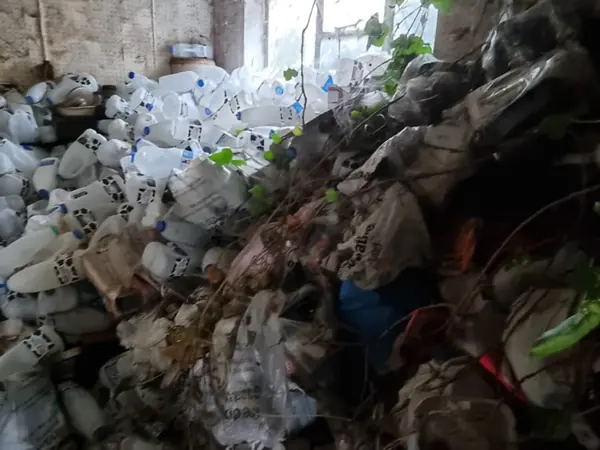
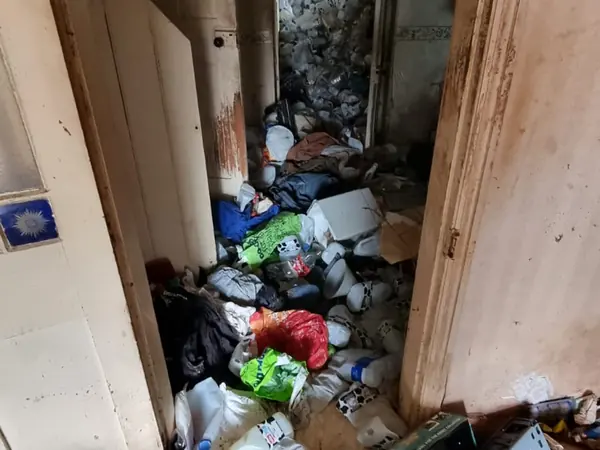
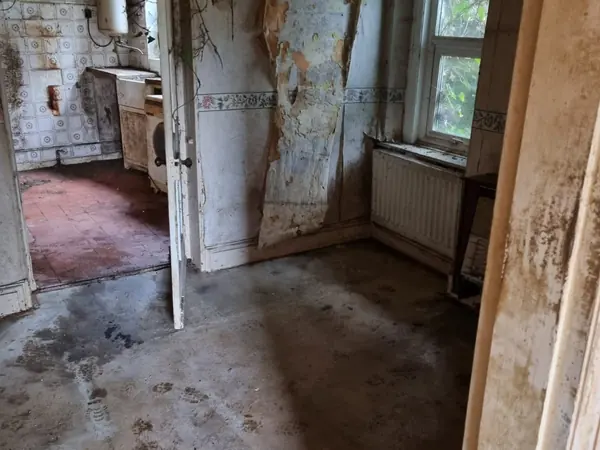
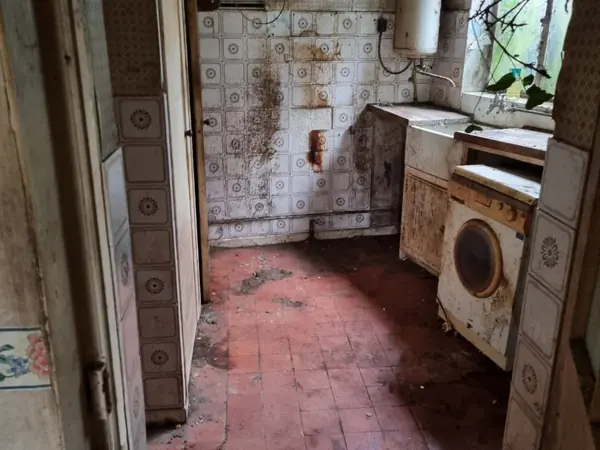
Landlords and letting agents ring us for an end of tenancy clearance when a let comes back with furniture still in it, and an end of tenancy job runs to their checkout date rather than to our diary. Garage and loft clearance is the other steady booking here, and out in the MK18 villages the outbuildings hold more than the rooms do. We do a fair number of properties packed floor to ceiling — decades of newspapers, every wardrobe full, a path worn between the rooms.
Nobody on our teams comments and nobody photographs anything except for the record of the work. Where there is rodent mess, decaying food or worse, it is classed as a verminous clearance and the crew comes kitted for it, with the right protective equipment and the right containment. Ask whether we will take on a house in that state and we will not hesitate; a hoarder house clearance in Buckingham is not an unusual booking for us and it is not one anybody needs to feel awkward about.
Buckingham, Aylesbury and the villages between
Buckingham sits in MK18 at the top of the county, with Stowe, Chackmore, Akeley, Adstock, Addington and Dadford a couple of miles out around it. The town lost its railway back in the sixties, so most people head for Bletchley or Milton Keynes Central, and Winslow's new station on the East West Rail line has changed the picture for the villages in between. Southwards the HP districts take over: Aylesbury itself in HP19, HP20, HP21 and HP22, with Aylesbury station and Aylesbury Vale Parkway on the Chiltern line up to Marylebone, and HP18 covering Waddesdon, Long Crendon, Brill and Grendon Underwood.
We cover the lot from here — Buckingham, Maids Moreton, Padbury, Gawcott, Tingewick, Winslow, Steeple Claydon, Aylesbury, Wendover, Princes Risborough, and on down through HP10, HP11, HP12 and HP13 into High Wycombe. Brackley, Towcester, Northampton and Bicester are near enough that we are often through them on the way, and there is nothing unusual about a Buckingham booking and a Brackley one falling on the same week.
Several of those places have their own pages, so if the property you are clearing is not in Buckingham itself, start there instead. house clearance in Aylesbury for the Vale and the HP districts, house clearance in Queens Park for the streets over towards Milton Keynes, and house clearance in Amersham down in the south of the county. Brackley, Towcester and Northampton over the border are the same day's run for us.
Getting a figure
Ring 0800 046 5555, or use the form on this page, with the address, the number of bedrooms, whether the loft, garage and shed are in scope. Any parking restriction we would need to work around for a Luton or a caged tipper. That is usually enough. Photographs help if the house is full, and they help a great deal if it is very full.
Common questions about house clearance in Buckingham
Do you cover the villages as well as the town? Yes. Maids Moreton, Padbury, Gawcott, Tingewick, Steeple Claydon and Winslow are all routine, and the MK18 villages are usually easier to get a van to than the middle of Buckingham on a market day.
Can you invoice a solicitor or an executor rather than me? Yes, and it is what we do on most probate clearances. We invoice the solicitor, the executor, the attorney or the estate directly, payment can come from the estate, and there is no deposit — the invoice follows the work.
Do I need to be there on the day? No. We can collect a key from an agent, a neighbour or a family member, photograph each room before we start and the empty property afterwards, and email the lot to you. Executors handling a Buckingham house from another county do it this way constantly.
How long does a house clearance in Buckingham take? Most houses go in a day, starting at nine. A very full property, or one where the loft and garage have not been touched in twenty years, may need a return visit, and we will tell you that on the day rather than at the end of it.
What will you not take away? Paint, aerosols, garden chemicals, gas canisters, asbestos and anything else classed as hazardous cannot travel in a household load. Tell us what is on the garage shelf when you book and we will arrange the right route for it or point you to who can.
What happens to everything you clear? Usable furniture and household goods are offered to reuse projects and charity shops locally. The rest is separated for recycling and what is left goes to a permitted transfer station, with the Waste Transfer Note sent on to you.
That is the job, really. Turn up, empty it, document where it went, put the paperwork in the post.