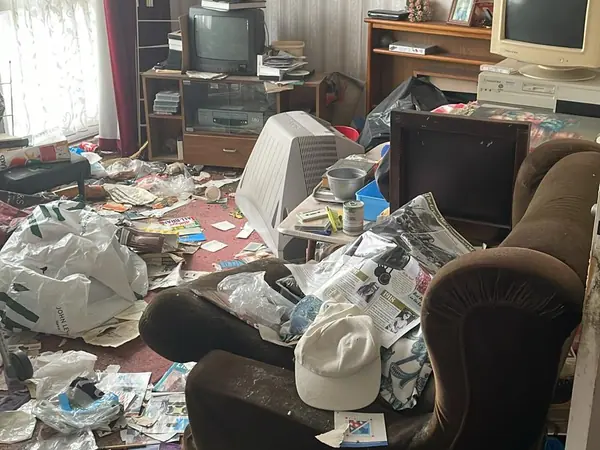
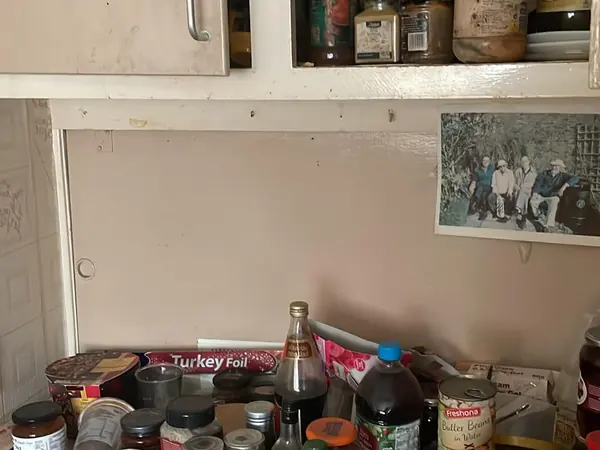
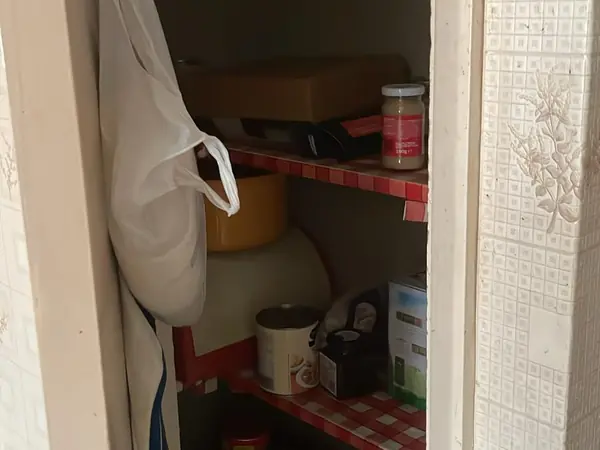
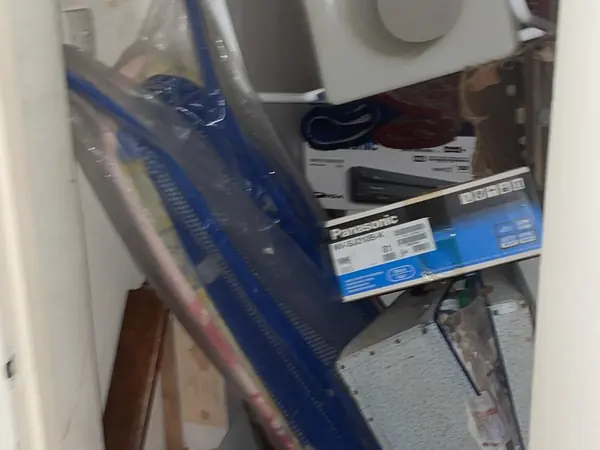
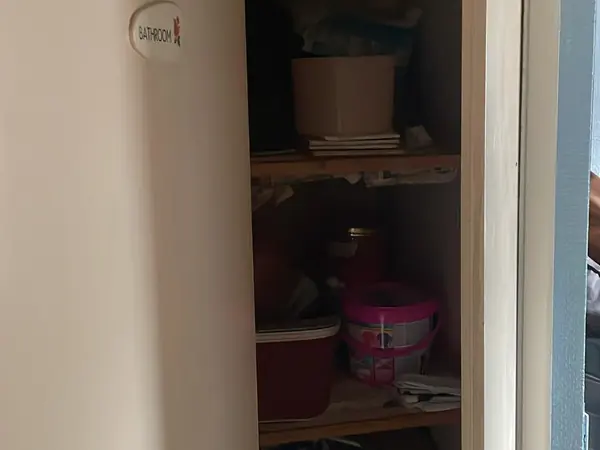
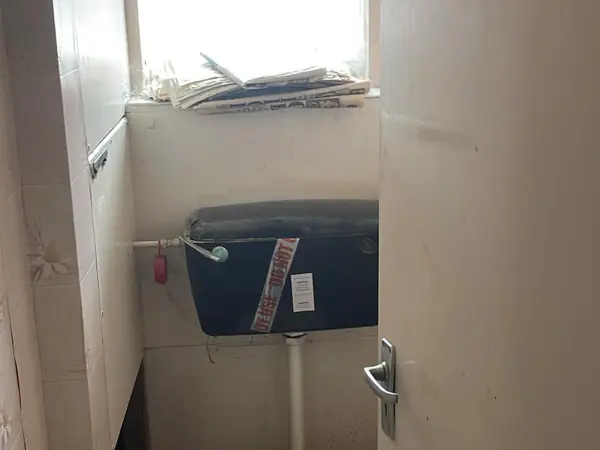
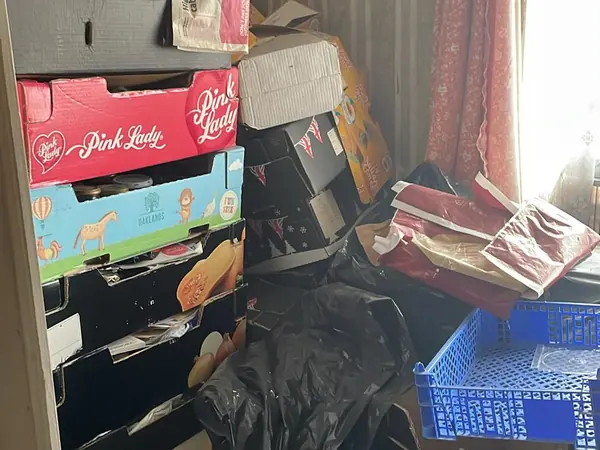
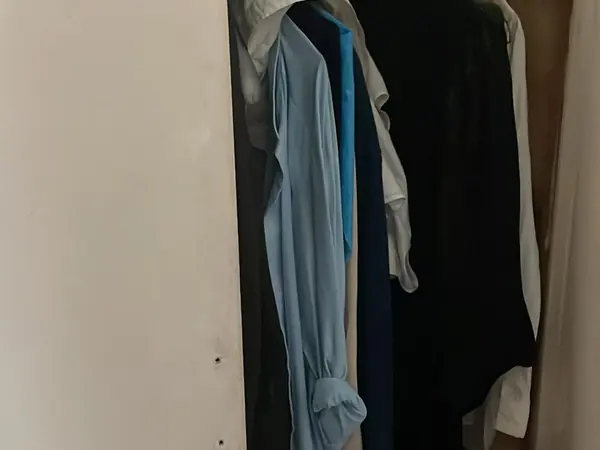
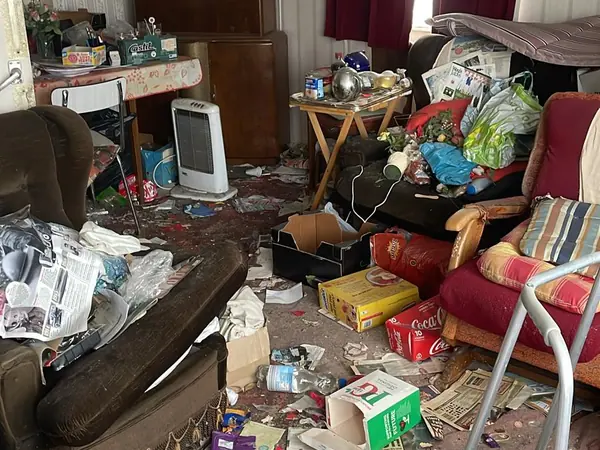
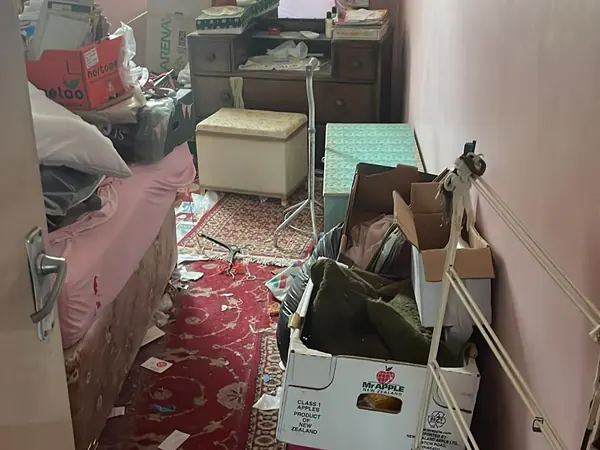
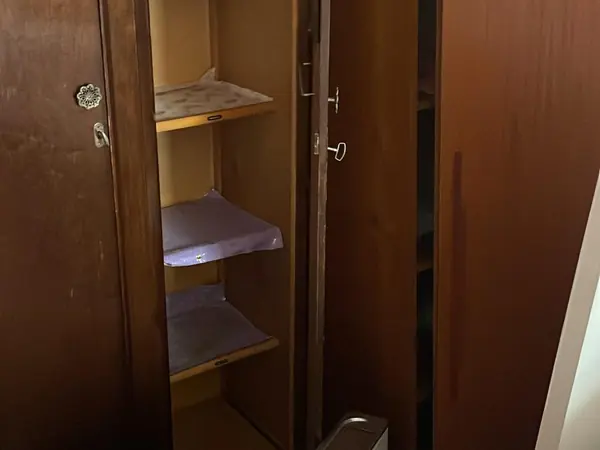
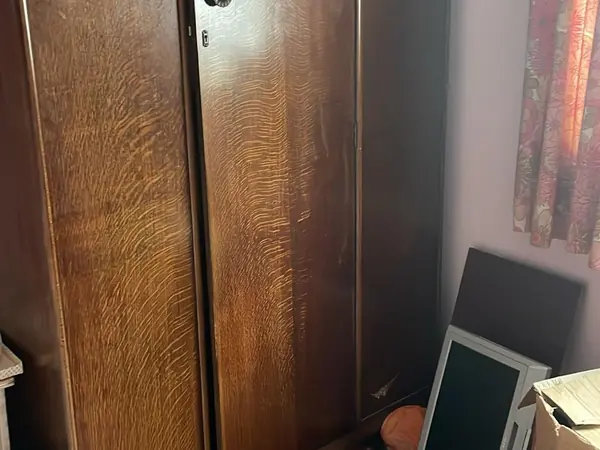
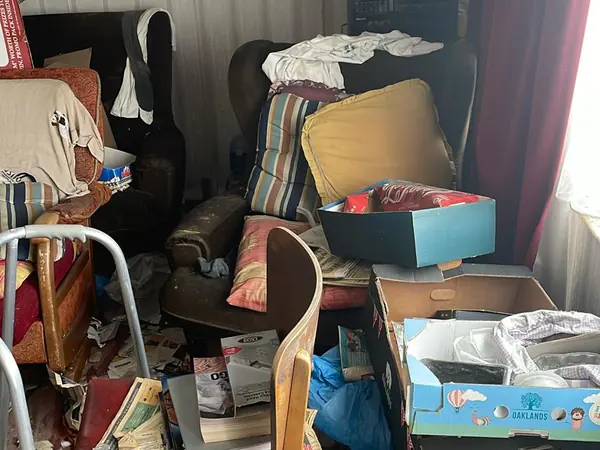
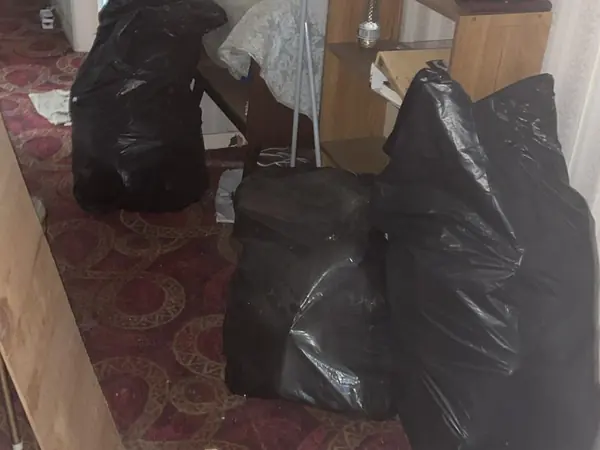
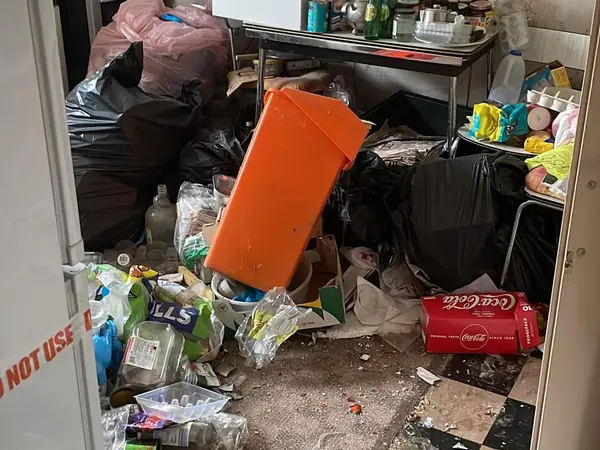
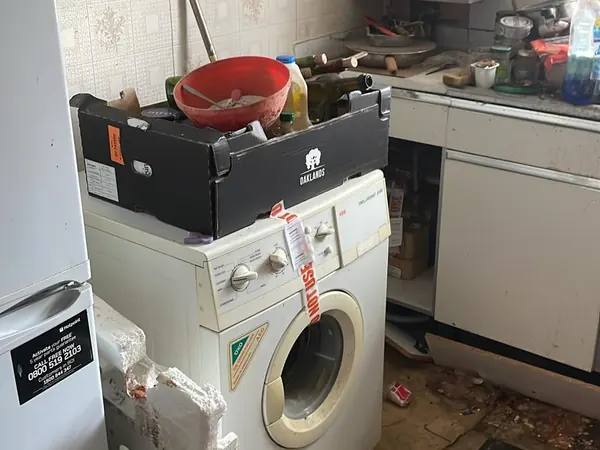
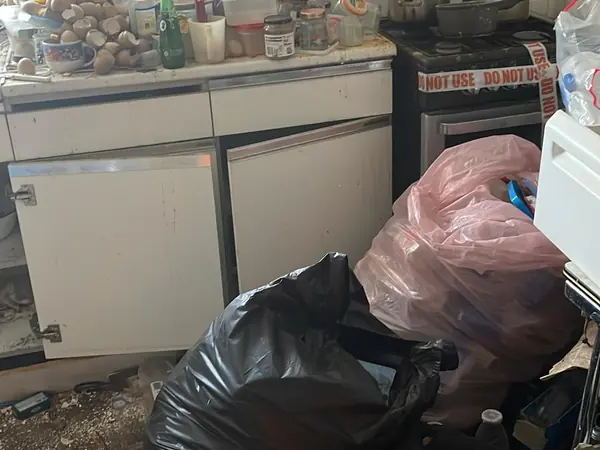
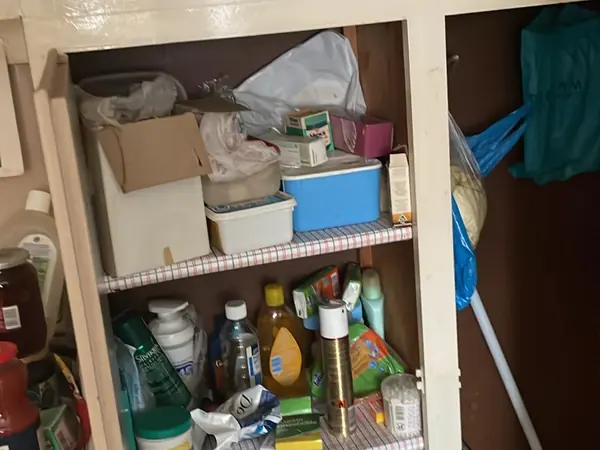
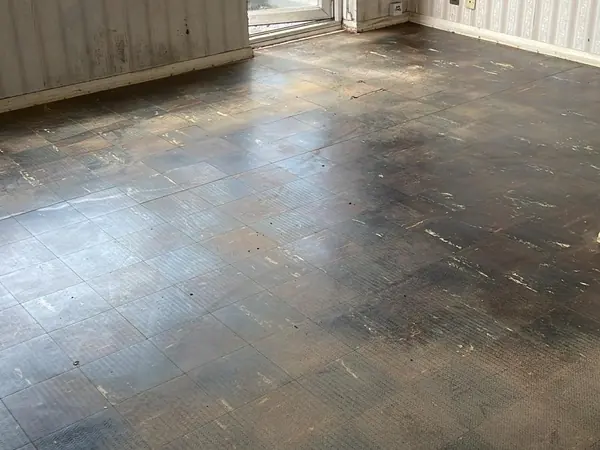
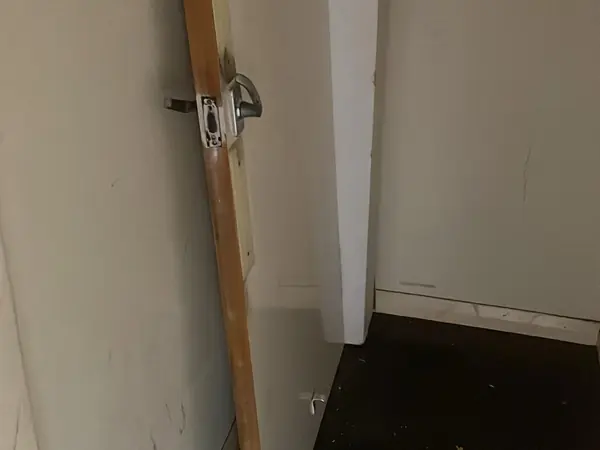
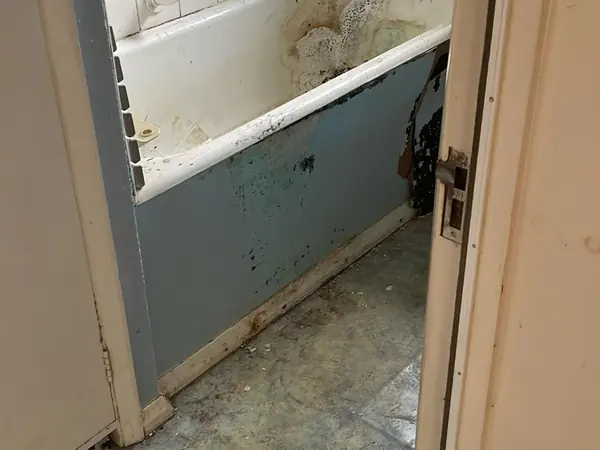
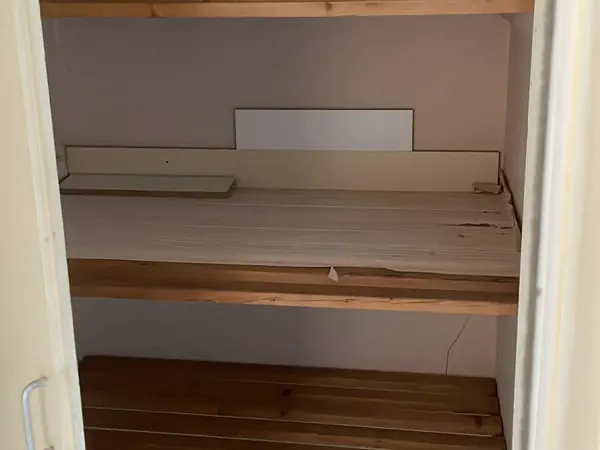
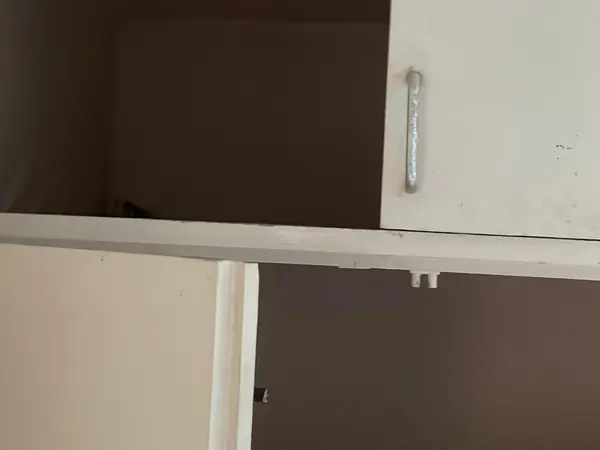
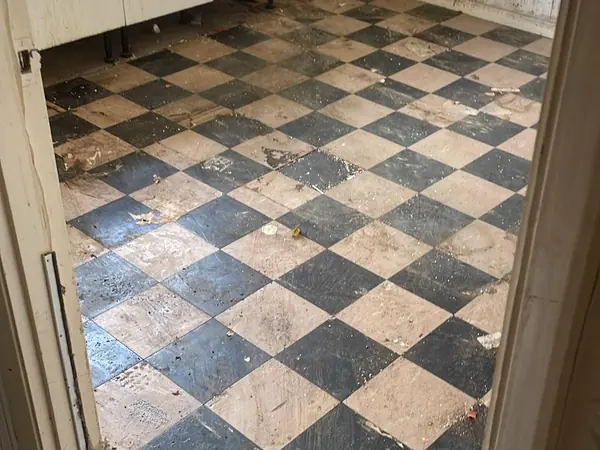
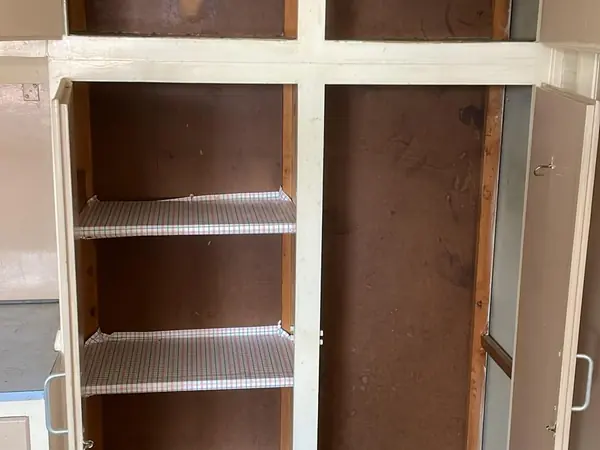
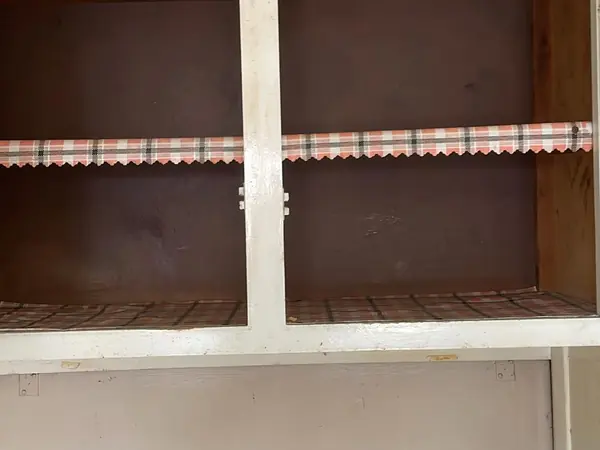
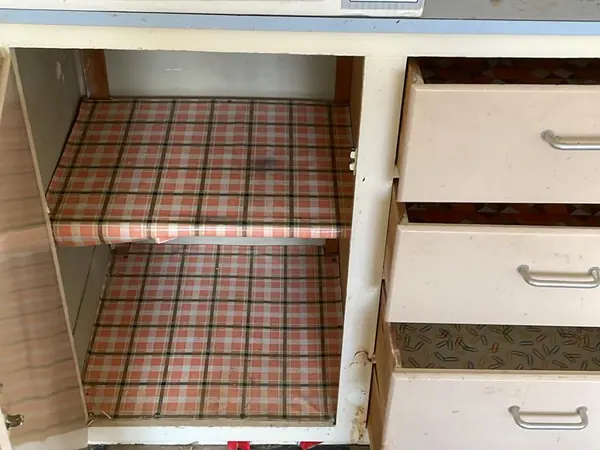
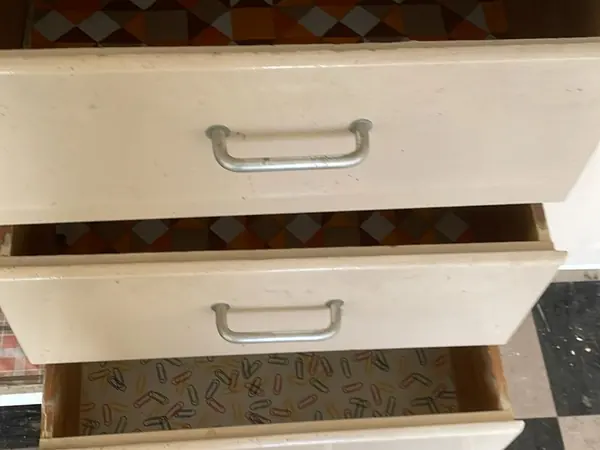
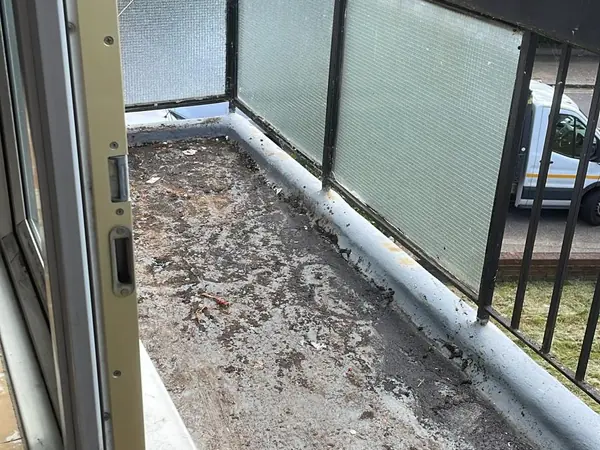
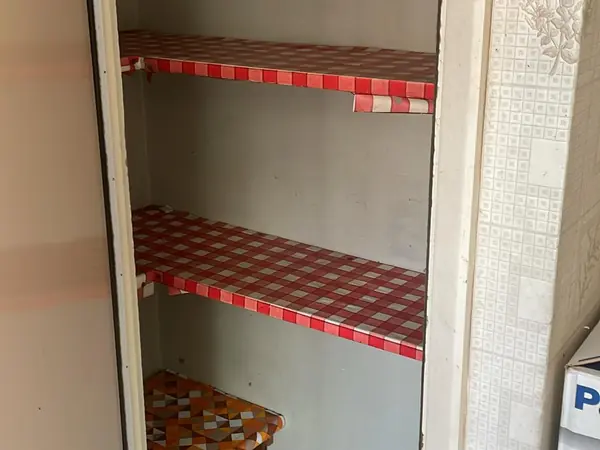
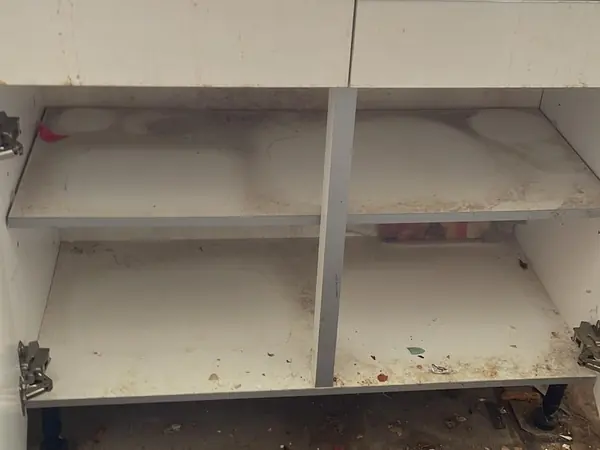
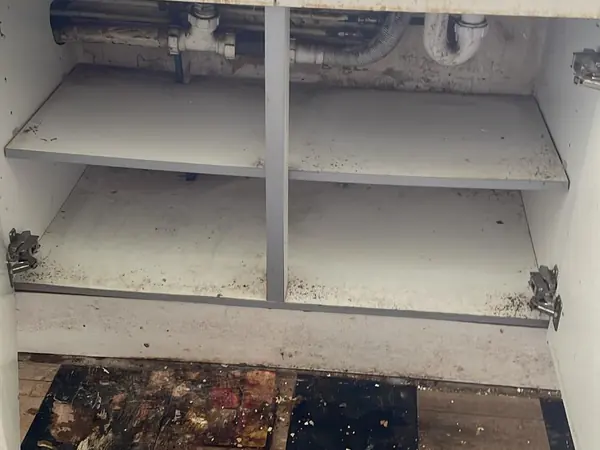
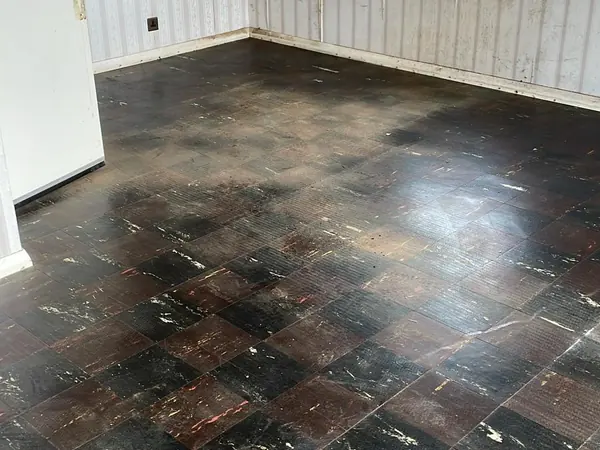
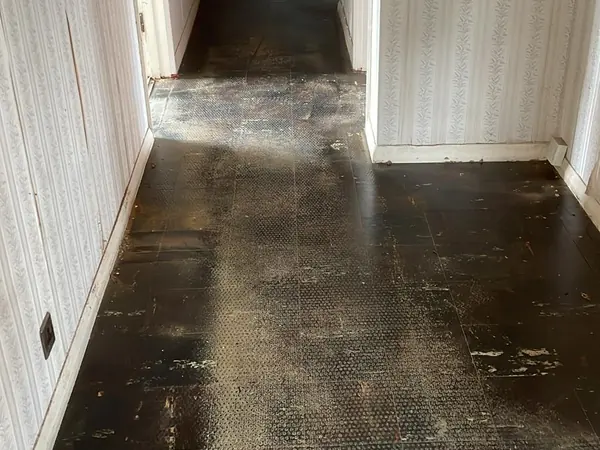
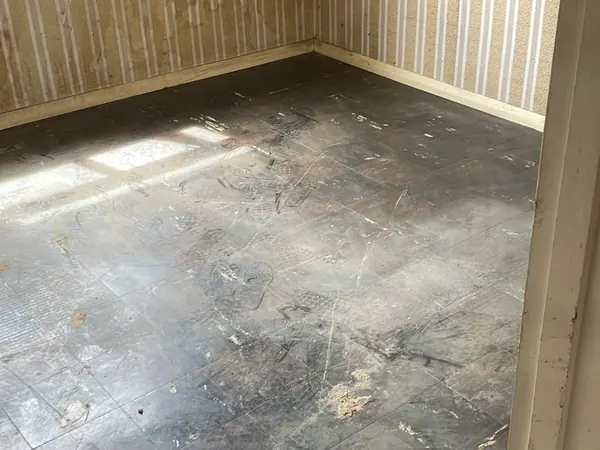
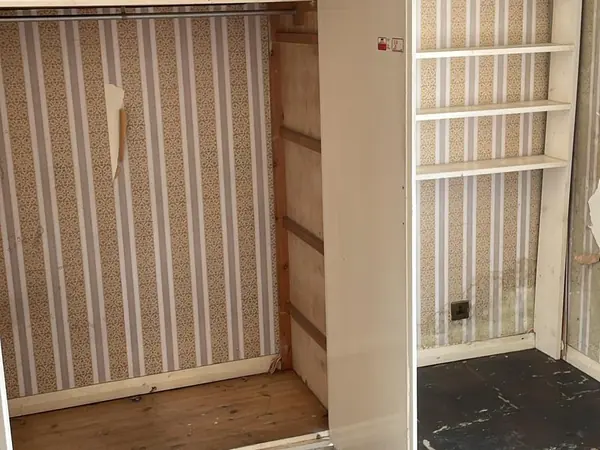
Half the flat was staying and half was going, and the only list of which was which came out of a solicitor's fittings and contents form. A two-bedroom apartment on the top floor of a converted institutional building on the edge of the town. The executors — three of them, none living anywhere near North Yorkshire — had already been up and taken the clothes and the personal things out. Everything else was still standing. The buyers wanted roughly half the furniture left in place and the other half gone: beds, bookcases, a sideboard, a wardrobe. One of the executors wrote to us beforehand. His description was the clearest brief we've had off anyone: "We have cleared the apartment of most personal items (clothes etc), but most furniture, rugs, crockery, kitchen equipment and books remain."
He couldn't send us photographs, because nobody in the family was local to Richmond. So he sent the estate agent's marketing blurb instead, with a note to remember that the pictures were taken before the personal effects came out. With it came the appendix to the contents form, showing which major items were staying and which needed disposing of. That was enough to size it. One load, a mattress on top, and a man on site pointing at things all morning: that goes, that stays, that goes. He told us at the outset he expected to be there himself to guide the team, and he was.
Top floor, and the stairs in those conversions are not the stairs the original builders put in. Everything came down by hand.
Between Christmas and New Year, in DL10 5
The other one people ask about is the late-December job on the newer estates north of the river. Two brothers: one organising the whole thing by email from a long way off, one closer who came over to open up, let the team in and point them at the rooms. Booked for the twenty-eighth, which meant the keys and the paperwork had to be settled by the twenty-second, because our office shuts from the twenty-third and the jobs go out to the crews before it does. The brother running it was straight about all of it and got everything back in time. That included a correction he sent the same evening he'd filled the questionnaire in: "I've just noticed typo on the questionnaire replies concerning my brother's mobile number who would be the most likely contact on the day."
That is a small thing and it is not a small thing. On a day between Christmas and New Year, with the office closed and the sheet already printed, the mobile number on that sheet is the only way the team can reach anybody at all.
Two other things made that day easier and they're worth repeating to anyone booking a winter house clearance up here. Water and power were both on. And the heating had been put on the day before, so the house wasn't at four degrees when eight hours of carrying started. It ran to two full loads on the same day — a house that had been lived in a long while — with a mattress and a gas bottle out of the shed on top of it.
What actually leaves the house, and where it goes
Not much of a Richmond house clearance ends up as waste, in practice. Furniture that somebody would still want, unchipped crockery, books, tools out of the garage — we'd rather find that a second home through a charity shop or a reuse scheme in the area than watch it go in a skip. Anything genuinely finished travels back with us and is booked in at a permitted transfer station, weighed and recorded, with the paperwork kept. Our waste carrier registration is CBDU419679 and it is worth checking, ours or anyone else's, on the Environment Agency's public register before a van turns up at a house you're responsible for.
Two categories cost extra and it's fairer to say so on a website than on a doorstep. Padded furniture — sofas, armchairs, footstools, mattresses — can no longer be tipped in with general household goods; the foam has to be kept separate and destroyed under the POP rules, and that costs us. Gas bottles are the same story: we'll take a Calor bottle out of a shed, as we did on that December job, but it goes to a different depot from everything else, so it appears as its own line. Chest freezers and fridge freezers are their own line for the same reason — the gas has to be recovered before the cabinet is broken up. Loose paint, garden chemicals, asbestos sheeting off an old coal house: those need a specific arrangement before the day, not a conversation at eleven o'clock in the morning with the van half full.
Getting a van into the town
Richmond punishes people who plan a clearance from a map. The Market Place is cobbled and enormous, the wynds off it are neither, and Cornforth Hill a van has no business on at all. On a Saturday the market is in the square and half the loading space with it. For a house clearance Richmond addresses need one thing settled before anything else: where the van can actually stand. If the property is inside the old town, we'd sooner know in advance which side of the street it sits on and whether there's a back lane. The difference between parking twenty feet from the door and parking round the corner and down a hill is an hour of the day, every load.
Out on the estates towards Gallowfields, or over the bridge, it's ordinary suburban parking and none of this applies.
The town's own railway station stopped taking passengers in 1969 — it's the cinema and food hall on the Swale now, and a very good building. So the working railhead for this area is Darlington on the East Coast Main Line, about twelve miles up the road, with Northallerton the other option to the south. Executors coming from further afield generally get the train to Darlington, hire a car or take a taxi over, and meet us at nine. The A1(M) is four miles away at Scotch Corner, which is why we can put a team into Richmond from either direction without an overnight stay, and why a two-load day here is a normal day rather than a special arrangement.
Keys, keysafes and nobody at the house
A fair share of the work here is instructed by someone who isn't in Yorkshire. The flat with the fittings and contents form was run from Berkshire, by an executor who had never once been in the building with a camera in his hand — hence the brochure, the appendix, the list. That is the ordinary shape of a house clearance Richmond executors instruct: solicitor in the town, estate somewhere else entirely, sale about to exchange, and a date that moves twice before it settles.
So the team photographs every room on arrival and again when it's empty, and the pictures go over with the invoice. That habit exists precisely because so many of our Richmond customers never see the property on the day. If you're an executor in Lincolnshire or Leicestershire signing off a bill for a house you last stood in six months ago, you should be able to see what state it was left in, and what was in it when we started.
Keysafes are fine, key collection from a solicitor's office in the town is fine, a neighbour with a spare set is fine. What isn't fine is finding out on the morning that nobody knows where the key is.
The village jobs
We're not only in the town. Richmond's own postcodes run a long way west: DL10 takes in Brompton-on-Swale, Catterick Garrison, Colburn, Gilling West and the villages towards Scotch Corner, and DL11 goes up Swaledale and Arkengarthdale past Reeth as far as the road holds. We also cross over to Leyburn, Bedale and into Wensleydale for Hawes.
Village property is where a clearance grows. It isn't the rooms — it's the garage and loft, and after those the outbuildings, and after those forty years of things that were put somewhere because there was somewhere to put them. A three-bedroom cottage in the dale with a dry garage and loft will out-volume a four-bedroom house in a town every time. When we're sizing a job out there we ask about the garage and loft first and the bedrooms second.
The garrison generates its own pattern of work as well — people posted on, houses handed back, contents that need shifting to a deadline somebody else has set. All of it sits in the DL postcodes, in the old Richmondshire district, which since 2023 has been run by North Yorkshire Council along with the rest of the county.
Price, and houses that are full
Tell us the number of bedrooms, whether the garage and loft are in scope, and what's staying, and we'll give you a figure over the phone that only moves if what we find is genuinely different from what was described. The estimate is free and commits you to nothing. Where the team can see on arrival that it's going to run to more loads or more days than we quoted, they say so then, and nothing else goes on the van until somebody has agreed it.
On a probate house clearance we invoice the solicitor, the executor or the estate directly, rather than the relative who happened to ring us. Payment can come out of the estate once probate allows it, and no deposit is taken beforehand. Payment comes after the work, by transfer, card or cheque — executors' accounts often can't do online banking and we've taken plenty of cheques from Richmond estates over the years.
Probate house clearance in Richmond, and flat clearance in the town
Probate work is the larger half of what we do here. An executor in another county, a house that has stood shut since the winter, a sale that can't move until the rooms are empty. That is a normal Richmond booking. Our probate house clearance page sets out the paperwork side in full. Flat clearance is the other regular one. The converted floors above the shops around the Market Place and the older buildings off Frenchgate have a common stair, no lift, and a door onto a cobbled street. A flat clearance there is planned around the carry rather than the contents.
Where else we work from Richmond
Down Swaledale and out along the A1 we cover the same ground the crews cross anyway. House clearance in Northallerton is the nearest of the neighbouring towns, house clearance in Darlington is over the Durham line, and house clearance in York is the bigger city south of here if the property you are asking about is down that way.
If it is a hoarder house clearance, say so plainly when you ring. A house packed to the ceiling is no bother. It changes the number of men and the number of loads, nothing else. Nobody gets a lecture, and the crew won't discuss it in the town.
Common questions
Can you work if I can't be there? Yes, and often we do. Key from a solicitor, a keysafe, or a relative to let us in. We photograph before and after, and those photographs go with the invoice.
Do you clear part of a house? Yes. The top-floor flat above was exactly that — half staying for the buyers, half going. If the split is written down on a fittings and contents form, send us the form and the appendix; that's a better brief than photographs.
Do you do house clearance in the villages, not just the town? Yes — anywhere in DL10 and DL11. That takes in Catterick, Brompton-upon-Swale and Scotch Corner on the DL10 side, and Reeth, Low Row and Arkengarthdale up Swaledale in DL11.
How long does a house clearance take? Most are one day. Two loads on one day is common here; a full house with a loaded garage and loft can run to a second day, and we'd tell you that before we started, not at four in the afternoon.
What won't you take? Loose paint, garden chemicals and anything with asbestos in it need arranging in advance. Gas bottles and padded furniture we do take, but they're handled separately under the POP and hazardous rules.
Do you work in winter? All year. Ask for the heating to be on the day before and the water and power left connected if the sale allows it — it makes a real difference to what the team gets through.
To arrange a house clearance in Richmond, or anywhere in DL10 and DL11, ring the office on 0800 046 5555 or send us the room-by-room detail by email, the way most of our executors do. We've been doing this since 2007. We'll come back with a date and a price.