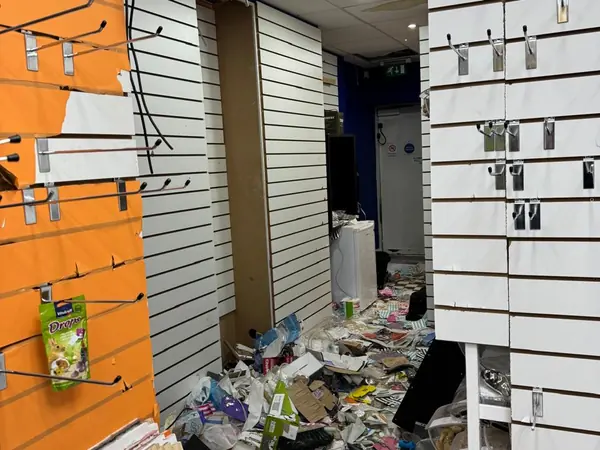
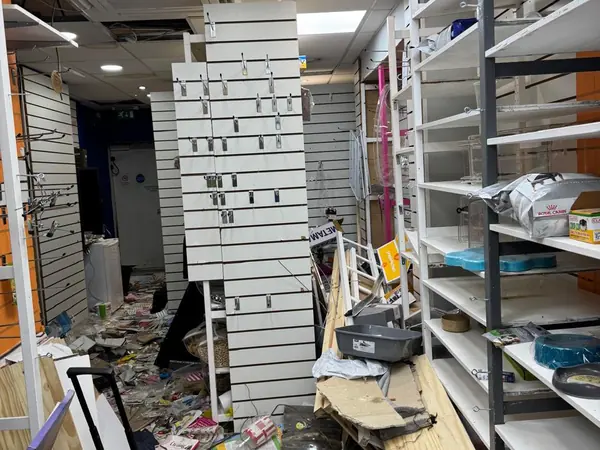
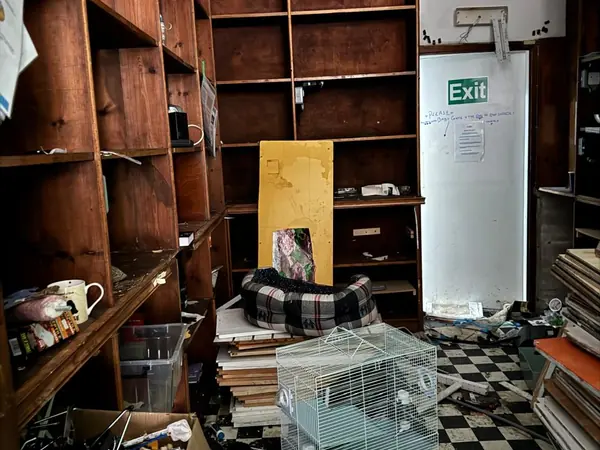
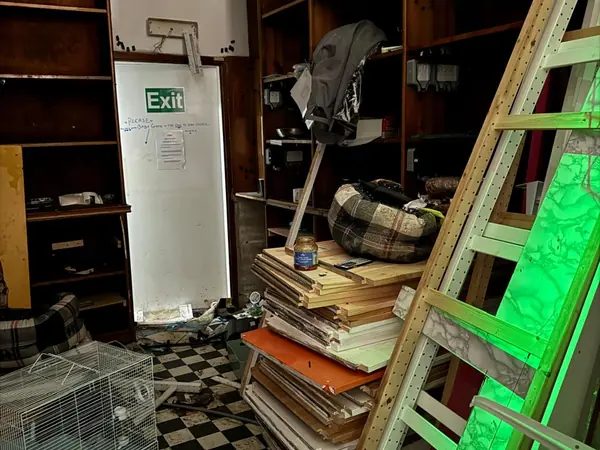
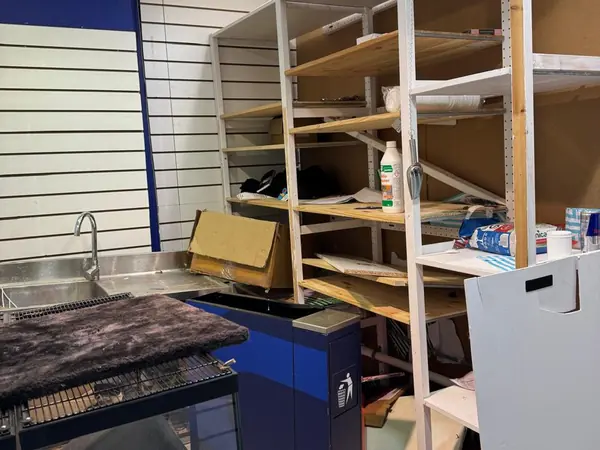
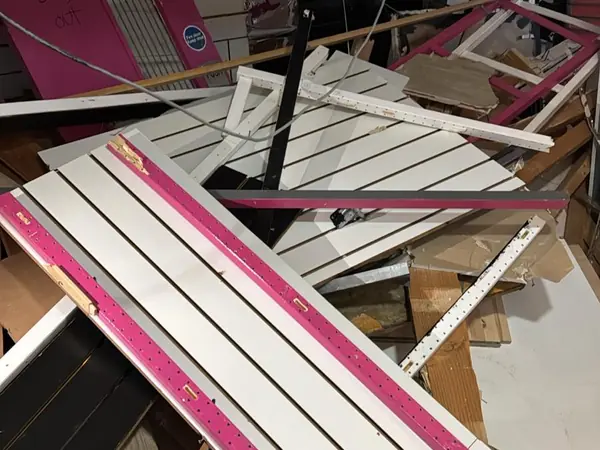
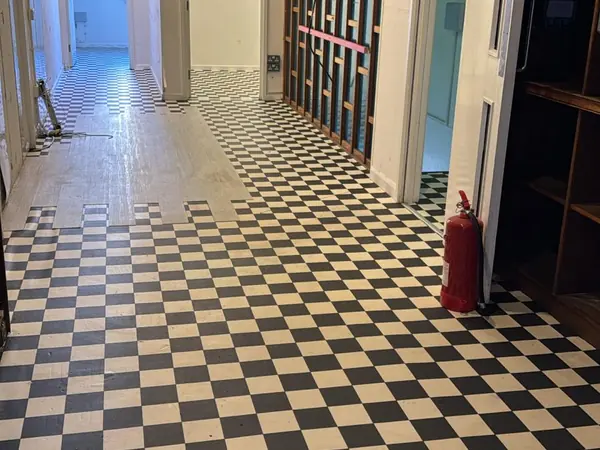
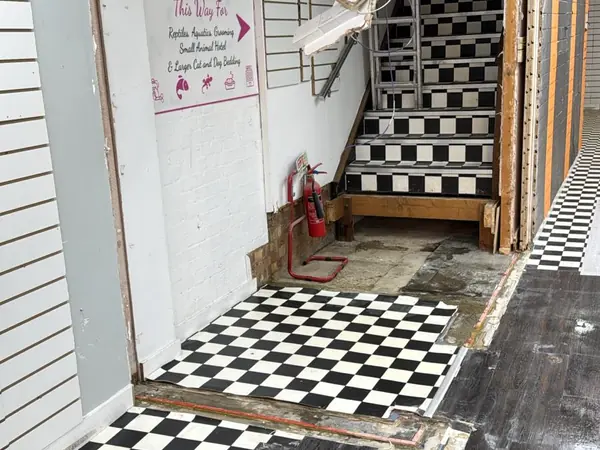
Most of the work here arrives the same way: a property is empty, somebody who does not live nearby has to deal with it, and the whole thing has to be settled over the phone and by email. One of ours on the DA2 side of Dartford was exactly that. The house was here; the man arranging it was over in Medway, a good half hour up the A2, and he never needed to stand in the hallway to get it done. A first load out of the property, and a mattress booked in on top as a separately handled item, because mattresses do not go in with general waste and never have. That is the honest shape of a lot of our days: one van, one load, one awkward item that needs its own route.
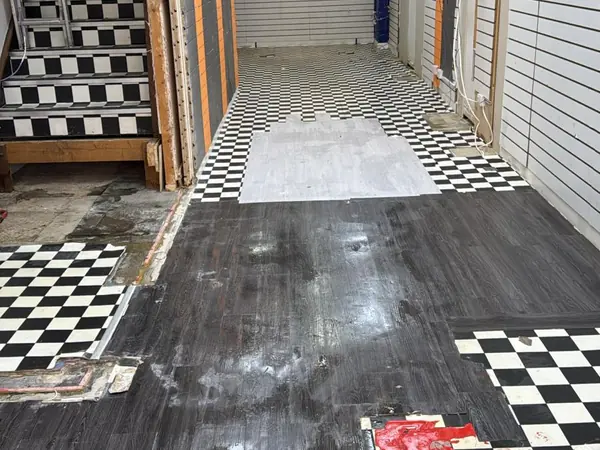
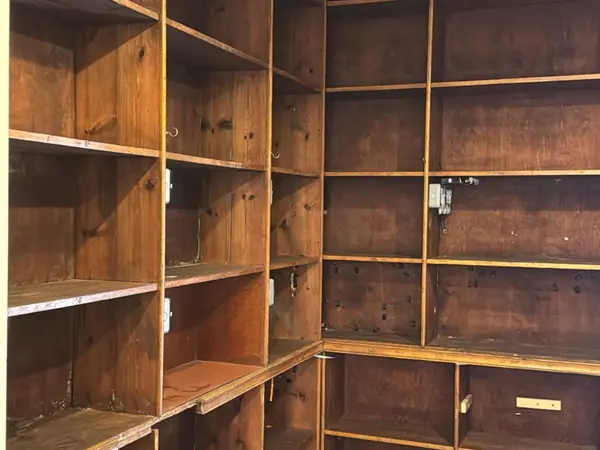
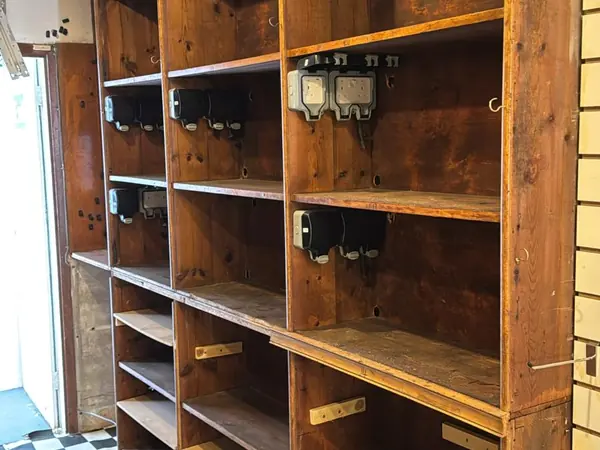
What we ask for before a day like that is a list of what stays. Not what goes — what stays. It is the single thing that prevents the four o'clock argument. It usually reads something like this:
- anything screwed or fixed to the walls
- kitchen and bathroom cabinets
- fitted wardrobes
- carpets, if they are being left for the next owner
- curtains and blinds
Half our mistakes across a working year come from nobody agreeing that list in advance. Written down before the day, it takes ten minutes on the phone. Discovered at four in the afternoon with a full van, it costs somebody a return trip.
Crayford, and booking a clearance you can't attend
A different sort of job, February 2022, DA1. A flat clearance — a ground-floor flat in a managed court block in Crayford. It belonged to a relative and was being sorted out by a family member living the far side of the county, out towards Ashford — an hour and a half in traffic on the A2 and the M20. He never once had to drive over.
He was a careful man about detail, and when he sent the information over to book the date he put it in a numbered list. One line of it has stayed with the office ever since: "The property is vacant,with no covid issues." That was February 2022, and it tells you what booking a house clearance felt like at the time — people volunteering, unprompted, that the crew would be walking into an empty flat and nobody had been ill in it. Nobody writes that now. It is the sort of line you could not make up, and it is why we would rather print a customer's own words, warts and typing errors and all, than smooth them into something that sounds like a brochure.
Access came through the on-site managers, who hold keys for the ground-floor flats. We were given their names and the site number, they were told in advance we were coming, and a mobile number was left with us in case anyone was out at the wrong moment. That is the whole trick to a flat clearance booked from a distance: somebody local with a key, agreed the week before, plus one phone that will actually be answered on the day. The date was fixed for a Wednesday, we went in that morning, and the money side was settled afterwards by bank transfer, which is normal — we ask for nothing before the work.
Court blocks and sheltered schemes around Crayford, Temple Hill and Slade Green usually mean narrow internal corridors, a fire door every few yards, and a rule about not blocking a communal exit. We work those with two carrying and one loading rather than dragging everything at once. It is slower for an hour and faster over a day.
The order of the day on a Dartford house clearance
The van is at the door for nine. The crew walks the property with whoever is there — or, if nobody is, with the list already agreed — and we confirm room by room what is going and what is staying before a single box is lifted. Then it runs top down: loft first if there is one, then bedrooms, then the ground floor, then garage, shed and garden. Top down is not a preference, it is physics. Carry a wardrobe up past a stacked landing and you will find out why.
Loading is done to fill the van properly rather than to look tidy on the driveway. A Luton takes a great deal more than people expect if it is packed with some thought, and every load that does not have to happen is an hour of somebody's day back. If the property turns out to hold more than the description suggested, we say so at the point we can see it. Mid-morning, while there is still time to arrange a second load the same day — not at the end.
Parking is the variable that ruins timings around here. The older terraced streets near Dartford station have nowhere to put a Luton except half on the kerb with the hazards going, and the town-centre one-way system does not forgive a van that has to turn round. Tell us on the phone whether there is a driveway, a bay, a permit zone or nothing at all, and we will plan the morning around it.
Garage and loft clearance in Dartford
A garage and loft clearance is its own job and we treat it as one. In the interwar and post-war housing across DA1 and DA2 the garage stopped being for a car about thirty years ago and quietly became a second attic. Paint tins, tiles left over from a bathroom, a lawnmower that has not started since the last dry summer, and the bicycles of grown-up children. The loft is the same story with worse access. Both are places where the previous generation's things end up, and both are why a clearance that looked like a three-bedroom job on the phone turns out to need more than one run.
If there is a garage and loft to do, say so at the booking. It changes nothing about our willingness and everything about the number of hands we send. What we cannot do is a loft with no boarding and no fixed ladder. We will look, and if it is not safe to stand in we will say plainly that it needs boarding out first rather than have somebody go through a ceiling.
The other thing about garages: asbestos. A fair number of older garage roofs and garage panels around north Kent are cement sheet with asbestos in them. We do not touch it, we do not break it up, and anyone who offers to take it on a household load is telling you something about how they work. It needs a licensed specialist and we will point you at that route.
Where we do house clearance around Dartford
DA1 covers the town centre, Crayford, Temple Hill and the streets running down to the marshes. DA2 takes in Wilmington, Joydens Wood, Darenth, Bean and the estates south of the A2. DA4 is the Darent valley proper — Farningham, Eynsford, Horton Kirby, South Darenth and Sutton at Hone, lanes that a long-wheelbase van has to be steered thoughtfully round. Greenhithe, Stone and Swanscombe out past Ebbsfleet sit in their own districts, as do Longfield, Hartley, New Ash Green and Fawkham. Proper north Kent villages, each with a page of its own rather than a claim on this one.
Dartford station is the anchor for most of it, with Crayford, Stone Crossing, Greenhithe, Swanscombe and Longfield on the branches either side, and Ebbsfleet International on HS1 a few minutes further east. If you are travelling in to meet us for a morning start, Dartford is usually the one you want; we can be at the door for nine and you are free by the time the trains fill up again.
We work the whole of this corner, so if the property is not actually in the borough there is probably a nearer page for it. East along the river it is Gravesend, the bigger town on that side of the crossing. West over the boundary into Greater London it is Bexley and, a little further round the A20, Sidcup. Same crews, same vans, same licence — it just saves you reading about streets you do not live on.
We are a licensed waste carrier with the Environment Agency, registration CBDU419679, and we carry full insurance for working inside somebody's property. Ask for either and they will be sent over — it is a fair question and we would rather you asked us than didn't.
What happens to a house clearance load once it leaves
Furniture, tools, crockery, decent bedding — if a thing still has a use in it, the sensible outcome is that somebody in Kent gets that use. We run reusable items to charity shops and community projects around the borough rather than tipping them because tipping is quicker. Whatever genuinely cannot be reused goes to a permitted transfer station and comes back as a weighed ticket, so there is a paper trail from your hallway to the point of disposal.
Sofas, armchairs and other upholstered seating follow their own route. The fire-retardant foam inside upholstery is treated as a controlled material now, and it has to be kept out of the general mix and processed on its own. That is why an old three-piece suite is handled as its own line rather than lumped in with the boxes. Mattresses are the same: separately listed, separately handled, and that is exactly what happened on the DA2 job above. Fridges and freezers have their own reason — the gas has to be drawn off under licence before the cabinet is broken up.
There are a few things the van cannot legally take on a household load: tins of paint, gas cylinders, solvents, car batteries, asbestos sheeting from an old garage roof. Tell us what is there when you book and we will say plainly which bits need a specialist — nobody wants that conversation invented on the day.
Probate house clearance in Dartford: executors, solicitors and houses that have got away from people
A probate house clearance is the commonest job of this kind on our books. When a property is being wound up rather than lived in, the person we deal with is often an executor two counties away, or a solicitor acting for the estate. That is routine for us. We take instructions from executors, attorneys and solicitors, we send an itemised invoice that goes straight into the estate file, and we work to the estate's timetable rather than the doorstep's. Photographs of the cleared property go over by email afterwards, so somebody who has never seen the place can still see it done. On a probate job the invoice goes to the solicitor, executor or estate directly and can be settled from the estate. There is no deposit and nothing is asked for before the work.
Some properties are very full. Rooms with a path through them, a landing you turn sideways for, forty years of newspapers. We clear those regularly and the crew does not remark on it, to you or to each other. What we do ask is that anything valuable. Documents, jewellery, cash tucked in a book. Is looked for first, or that somebody stays with us while we work through, because in a house like that things surface in odd places and we would rather hand something straight to you than have to decide what it is.
Questions we get asked
Do I need to be there? No. Plenty of our Dartford house clearance work is booked by people who never see the property that day. A key from an estate agent, a neighbour, or in the Crayford case above the block's own managers, and photographs of the empty rooms sent afterwards.
Do I have to box things up first? No. The crew clears cupboards, wardrobes and drawers as they stand, and will sweep through at the end if you want it left clean.
Can you take up carpets? Yes, carpets and underlay come up if that is what you want. Just make it clear at booking, because plenty of people want them left.
How long does a house clearance take? Most are done in the day. If the property is cluttered we may need more than one load, and we will tell you that in the morning rather than at the end of the afternoon.
Can you clear a garage and loft as well as the house? Yes, and it is worth flagging when you book so we send the right number of people. See the section above on why those two eat time.
Who is the invoice made out to on a probate clearance? The solicitor, the executor or the estate, whichever you tell us at booking, and it can be paid out of the estate. No deposit is taken.
How quickly can you come? Usually within a few days. School holidays, the run-up to Christmas and probate season in the spring are busier.
To book a house clearance in Dartford, Crayford, Wilmington or out through the Darent valley villages, ring us on 0800 046 5555 or send an email with the property type, the rough contents and what is staying behind. We have been clearing houses since 2007, we know what these streets are like to park on, and you will get a straight answer about what the day will involve.