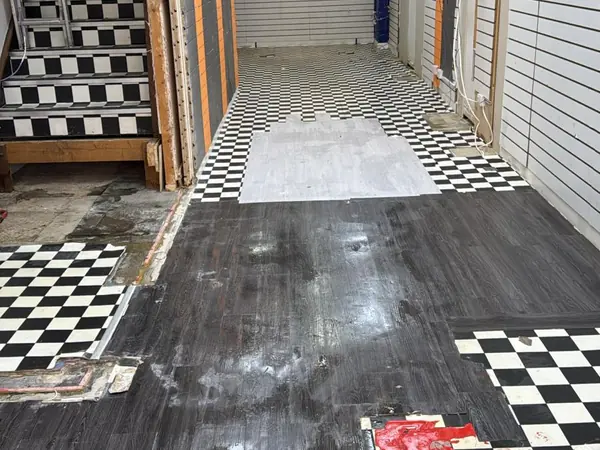
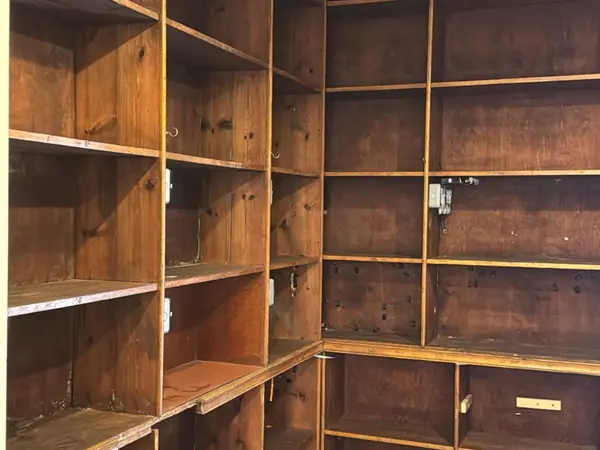
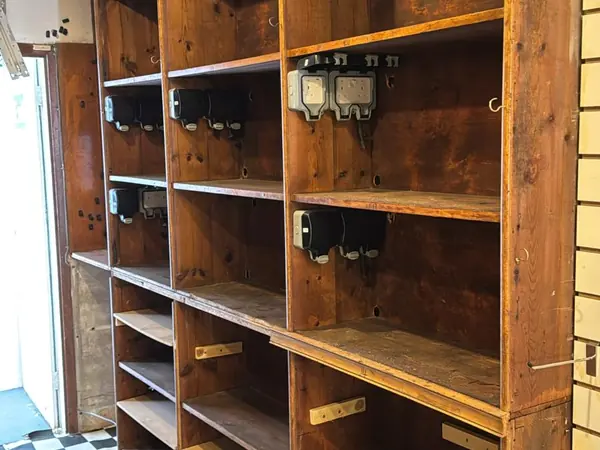
House clearance in Barmouth is not much like house clearance anywhere else, and it is the estuary that does it. This is the north Wales coast at its most awkward for a van. We work the LL42 district all year — the terraces running back off the High Street, the flats along the front, the old cottages up the hill — and every job here begins with the same two questions. Where can the van actually stop, and how far does everything have to be carried on foot? Answer those two on the phone and the rest of the day usually looks after itself.
Here is one from last August that shows how much a good description is worth. It was booked off photographs: the customer sent a picture of every room several days beforehand and set out plainly what was coming out and what was not. "Please note that the loft, bathroom and garden are all clear and there is nothing to remove." A two-bedroom semi-detached house, then, with the whole of the work indoors. Carpets up and underlay with them, curtains down, the lino out of the bathroom and the kitchen, the washing machine and the electric cooker disconnected and taken. A fridge and a chest freezer stood in the garage in the photographs, and the customer told us in advance that both would be gone before we arrived, so nobody turned up expecting to shift them.
One item on our list was wrong, and it was the customer who caught it. What we had written down as a mattress was in fact a wooden bed base. That distinction matters more than it sounds: a mattress has to be kept apart from the rest of the load and goes down its own disposal route, whereas a wooden base is timber and travels with everything else. They read the list properly, said so before the day, and we changed it. That is exactly what the list is for.
Access, for once, was the easy part. "There is a drive way for at least 2 cars so your crew should not have any problem getting a Luton van on the drive right up to the door." Nothing to carry further than a few yards, no permit to sort, no reversing down anything narrow. The customer lived close by and came round at nine to open up, then left the team to it. Booking came down to which crews were free — one team available on the sixteenth, two on the seventeenth — and either date suited, so we went on the sixteenth and the house was done that day.
Read that back and you can see why it ran to time. Photographs first, a clear list, a hard standing for the van and someone with a key at nine. Very little of it would apply on the hill above the High Street here, mind. A driveway with room for two cars is not something most of the old Barmouth terraces can offer, which is why we ask the questions we ask.
Getting a van into Barmouth
Anyone who lives here already knows the awkward bit. The railway viaduct across the Mawddach carries trains and walkers, not our vehicles, so a load coming up from Fairbourne, Arthog or Llwyngwril goes the long way round the estuary on the A493, through Penmaenpool and Dolgellau, then back out west on the A470 and A496. That is a good forty minutes of driving to cover what looks like half a mile on a map. Coming from the north — Dyffryn Ardudwy, Llanbedr, Harlech, Talsarnau — it is a straight run down the A496 and much quicker.
We build that into the day. If a house clearance in LL42 needs more than one load, we would rather bring a second vehicle than send one van round the estuary twice. You cannot nip back to a depot mid-afternoon on this coast. Whatever the house is going to need has to be on the van when it leaves in the morning.
Parking is its own conversation. The streets running back off the High Street are tight, and between June and September you are competing with visitors for every space. Tell us in advance which end of the street to aim for and whether there is a resident's bay or a yard we can use — five minutes of that on the phone saves an hour on the day.
The houses above the town
Barmouth is not built like an ordinary town. Behind the High Street the old cottages climb the hillside in terraces under Dinas Oleu, reached by flights of stone steps rather than by anything a van can drive up. We have carried furniture down steps like that. A three-seat sofa taken down thirty-odd steps in the wet is slow work, and it is a fair reason for a job to run longer than the square footage suggests.
Say so when you ring. The number of bedrooms tells us less than "the van has to stop on the road below and everything comes down on foot".
Then there is the rest of the stock — Victorian and Edwardian terraces running up towards Llanaber, bungalows on the flat, and holiday flats that turn over every few years. A flat clearance in Barmouth is usually one modest load: beds, a sofa, a kitchen's worth of crockery, a shed of beach clutter. A family house lived in for fifty years is another matter, and the loft is nearly always the surprise. Garage and loft clearance in Barmouth is the part people forget to mention and then apologise for at ten past nine.
Upholstered furniture and what has to travel apart
Sofas, armchairs, padded dining chairs, headboards: anything with treated foam or fabric in it is kept separate from the rest of a house clearance load. Since the rules changed, that material is classed as containing persistent organic pollutants, so it cannot be mixed in with general waste. It is stacked on its own on the vehicle and it goes for incineration rather than into recycling. Mattresses go their own way too, which is why we ask about beds specifically, and why the difference between a mattress and a bare wooden base is worth getting right before the day.
The same principle covers other things. Half-used tins of paint, camping gas cylinders, weedkiller, old solvents from the back of a garage: none of that goes in with the furniture. Fridges and freezers need their gas taken out under supervision, so they are counted separately as well. Tell us what is lurking in the shed and nothing has to be renegotiated on the doorstep.
If a thing still works and somebody would want it, we would far sooner it went to a reuse project or one of the charity shops along the coast than onto the van at all. What is genuinely finished with is weighed in at a permitted transfer station and the paperwork comes back with the driver — ask for a copy of the transfer note and you will get one. Our waste carrier registration with the Environment Agency is CBDU419679, the team is insured for working inside your property, and we have been doing this since 2007.
Probate house clearance in Barmouth and executors at a distance
A good share of what we do in Gwynedd is probate work, and the person instructing us is often three counties away. That is fine. We have cleared houses where the executor never came to the door at all, gave us the key safe code over the phone, and got photographs of every emptied room the same evening. For probate house clearance in Barmouth that is the normal arrangement rather than the exception, and it is why we take the trouble to photograph rooms before and after.
We can deal directly with the solicitor or the executor handling the estate, take instructions from them, and send the photographs and the waste transfer note to whoever needs them. If more than one person is involved, tell us at the point of booking who is instructing us, so the team on the day is not asking a neighbour to make decisions.
On probate house clearance we invoice the solicitor, the executor or the estate directly — whoever is instructing us — and the payment can come out of the estate rather than from anybody's own pocket. There is no deposit to find beforehand. The invoice follows the work rather than coming before it, and it goes wherever you tell us at booking, with the photographs and the transfer note attached if the file needs them. Executors ask us this more often than they ask about anything else, so it is worth saying plainly.
Things turn up during clearances, and they get handed back. On one house the team found a set of keys that nobody knew about, put them in an envelope and posted them through the front door once the main keys were back in the key safe. On another, jewellery came to light part-way through and went back to the executor by special delivery along with the keys. We do not make judgements about what is valuable — if it looks personal, it comes out and it comes back to you.
What we will not do
We do not take fixtures and fittings out of walls. On one house the lounge curtains had to stay, because the track was screwed into the plaster and pulling it off would have taken half the wall with it. The customer was told and it was left. Bathroom curtains on that same job were simply forgotten, which the team admitted to afterwards. That is how it goes sometimes.
Medical aids — hospital beds, hoists, commodes on loan from the health board — we leave for the service that supplied them, set out in the garden with black bags over anything that would suffer in the rain, so the collection crew need not go into the house.
How a day of house clearance runs
The team aims to be at the property for nine and to have it cleared that day wherever it can be done. Nothing needs boxing or bagging up beforehand: cupboards, wardrobes and drawers are emptied by the team, carpets and underlay come up if you want them up, and the rooms are brushed through at the end. If carpets are coming out of a whole house as well as the contents, that is often what turns one day into two, and we will say so rather than discover it at four in the afternoon.
Nothing behind a wardrobe can be assessed until the wardrobe moves. We say that plainly up front. If our estimate is going to change, you hear it while the team is still standing in the house, not afterwards.
Houses that have filled up over decades do not put us off, and we do not make a fuss about them. Nor do we comment. Come the end of the day the rooms are empty, brushed through, and that is the last anyone hears of it.
Where we cover from here
Barmouth and the LL42 district, out along the coast to Llanaber and Talybont, north through Dyffryn Ardudwy in LL44, Llanbedr and Harlech in LL45 and LL46, and on to Talsarnau, Penrhyndeudraeth and Porthmadog. Inland to Dolgellau in LL40 and over the pass to Bala in LL23, and up to Blaenau Ffestiniog. South of the estuary we work Fairbourne, Arthog, Llwyngwril, Tywyn and Aberdovey. Criccieth, Garndolbenmaen, Pwllheli, Caernarfon, Y Felinheli and Bangor we cover as their own run.
If it is one of those you actually want, they have pages of their own: house clearance in Bangor for the city end of the county, house clearance in Harlech straight up the coast road from here, and house clearance in Criccieth round on the Llŷn side.
Trains here are the Cambrian Coast line — Barmouth station in the middle of town, Morfa Mawddach across the bridge, Machynlleth one way and Pwllheli the other. Handy if you are travelling back to meet us and would rather not drive. Less handy for a houseful of furniture, which is where we come in. Gwynedd's household recycling centres are set up for a car boot of waste, not the contents of a whole property, and that gap is what most people ring us about.
Send through the address, the number of rooms, whether there is a loft or a garage, and roughly what is in them. Photographs of each room are better still. Ring the office on 0800 046 5555 or use the form on this page, and you will have a figure before anyone sets off. If the house turns out to hold more than the description suggested, you will hear it on the day, in person, before the extra work starts.
Common questions about house clearance in Barmouth
What does a house clearance in Barmouth cost? Ring the office on 0800 046 5555 or send photographs of the rooms through the form on this page, and we will come back to you with a figure. We do not publish numbers, because a two-bedroom flat on the front and a family house with a loft, a garage and thirty steps up from the road are not the same job and never will be.
Do I have to be there on the day? No. We can collect a key from a neighbour, an agent or a key safe, and you get photographs of every room once it is empty. Plenty of the Barmouth work we do is instructed by someone who lives hours away.
Can you take up carpets, curtains and lino? Yes, all three, and the underlay with the carpets. Say so when you book so the team brings the right tools. Curtain tracks and other fittings screwed into the plaster we leave alone — pulling those off does more harm than good.
What happens to things that still have some use in them? Anything serviceable is offered to reuse projects and charity shops before it goes anywhere near a tip. The rest is weighed in at a permitted transfer station, and a copy of the waste transfer note comes back to you on request.
Can you clear a holiday flat or an end of tenancy in LL42? Yes. End of tenancy clearance in Barmouth is usually a single-day job — beds, sofa, kitchen contents, whatever has accumulated in the shed — and we can take a single item just as easily if that is all there is.
Do you handle probate and hoarded houses? Both. Probate house clearance in Barmouth is a large part of what we do, and a hoarder house clearance is treated as an ordinary day's work by the team, done quietly and without remark.